Cottonwood Trees in Kansas City: Problems, Removal Cost, and Alternatives
In this guide (12 sections)
- The Cottonwood Dilemma Every KC Homeowner Faces
- Why Cottonwoods Are Everywhere in Kansas City
- The “Cotton” Season Nuisance
- Weak Wood and Storm Damage
- Root Systems and Foundation Risk
- Removal Cost for Mature Cottonwoods
- KC Ordinances for Cottonwood Removal
- Best Replacement Trees for Kansas City
- When to Keep vs. Remove a Cottonwood
- Frequently Asked Questions
- Make the Right Decision for Your Property
- Related Reading
The Cottonwood Dilemma Every KC Homeowner Faces
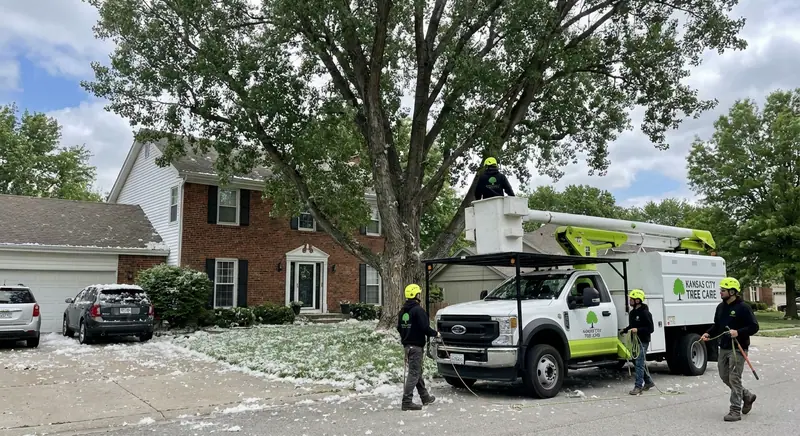
It’s late May in Kansas City, and the air looks like it’s snowing. White fluffy seeds are piling up in your gutters, clogging your AC unit, drifting against your garage door, and coating every surface within a two-block radius. Your neighbor’s massive cottonwood is doing what cottonwoods do – and there’s nothing subtle about it.
Cottonwoods are the largest native trees in the Kansas City area. They grow fast, they grow big, and they grow everywhere – especially along the Missouri River bottoms, in Riverside, Parkville, and scattered throughout established neighborhoods on both the Kansas and Missouri sides. A mature cottonwood can be 80-100 feet tall with a trunk four feet across. That’s an impressive tree. It’s also a tree that causes problems homeowners can’t ignore.
We’ve removed more cottonwoods than any other species in our 35+ years serving the KC metro. But we’ve also saved plenty of them. Here’s an honest assessment of cottonwood problems, what they actually cost you, and when removal makes sense versus when it doesn’t.
Why Cottonwoods Are Everywhere in Kansas City
Cottonwoods are native to the Missouri and Kansas River floodplains. They’re pioneer trees – the first species to colonize disturbed ground along riverbanks, construction sites, and abandoned fields. They grow incredibly fast, sometimes 5-6 feet per year in good conditions. That speed is why developers planted them in new KC subdivisions in the 1950s-70s: instant shade.
The problem is that fast growth comes with trade-offs. Cottonwood wood is soft, brittle, and prone to decay. The same tree that gave you 40 feet of shade in ten years is now a 70-foot liability with hollow branches and a root system that’s invading everything underground.
You’ll find the biggest cottonwoods along the Missouri River corridor – Riverside, Parkville, the Northland, and the river bottoms east of downtown. But they’re also common in Overland Park, Olathe, Independence, and pretty much every established KC neighborhood. If your home was built before 1990, there’s a good chance there’s a cottonwood within striking distance of your house.
The “Cotton” Season Nuisance
Let’s start with the most obvious annoyance. Female cottonwoods produce massive quantities of cottony seeds in late May and June. A single large tree can release millions of seeds over a 2-3 week period. The result is a blizzard of white fluff that:
- Clogs window screens, AC condensers, and pool filters
- Piles up in gutters and downspouts
- Coats cars, decks, patios, and outdoor furniture
- Triggers allergies (the cotton itself isn’t allergenic, but it carries pollen from other trees and grasses)
- Creates a fire hazard when it accumulates in dry, sheltered areas
The cotton season is temporary, but it’s intense. Homeowners near large cottonwoods spend hours cleaning up, and the mess returns daily until the tree finishes its reproductive cycle. It’s the number one complaint we hear about cottonwoods, and honestly, it’s the least serious problem. The cotton is annoying. The structural issues are dangerous.
Weak Wood and Storm Damage
This is where cottonwoods go from nuisance to hazard. Cottonwood is one of the weakest hardwoods native to Kansas City. The wood is soft, the branch attachments are often poorly structured, and the species is extremely susceptible to internal decay.
What that means in practice: when a thunderstorm rolls through the KC metro with 60 mph straight-line winds, cottonwoods are usually the first trees to lose limbs. And we’re not talking about small branches. Cottonwood limbs can be 12-18 inches in diameter and 20+ feet long. When one of those comes down on your roof, your car, or your fence, you’re looking at thousands of dollars in damage.
We respond to more storm damage calls involving cottonwoods than any other species. The combination of large size, weak wood, and shallow root system makes them disproportionately vulnerable to Kansas City’s severe weather. Ice storms are particularly devastating – cottonwood branches can’t support the weight of heavy ice accumulation the way oaks and hickories can.
Internal decay is the hidden problem. Cottonwoods develop heart rot – fungal decay that hollows out the trunk and major branches from the inside. The tree can look perfectly healthy from the outside while the interior is spongy and structurally compromised. We’ve taken down cottonwoods that were 80% hollow. A hazardous tree evaluation can detect internal decay before it causes a failure.
The math on cottonwood storm damage is straightforward. A mature cottonwood dropping a major limb on your roof causes $3,000-$15,000+ in damage depending on what it hits. Emergency storm cleanup adds another $1,500-$4,000. The total cost of one bad storm event often exceeds what proactive removal would have cost. We’ve had customers in Shawnee and the Northland who’d been putting off cottonwood removal for years – until a summer thunderstorm made the decision for them at triple the price.
Root Systems and Foundation Risk
Cottonwood root systems are extensive, aggressive, and shallow. A mature cottonwood can send roots 50-75 feet from the trunk, and those roots actively seek moisture. That makes them a serious threat to:
- Foundations – roots extract moisture from KC’s clay soil, causing shrinkage and settling. The asymmetric drying creates differential settlement that cracks foundations.
- Sewer lines – cottonwood roots are notorious for invading sewer laterals, especially the old clay tile pipes common in pre-1970s KC homes. Once roots enter a sewer line, they grow rapidly and can completely block the pipe.
- Sidewalks and driveways – shallow surface roots heave concrete. Walk through any older KC neighborhood with mature cottonwoods and you’ll see buckled sidewalks everywhere.
- Irrigation systems – roots will find and invade drip lines and sprinkler pipe joints.
If you have a cottonwood within 30 feet of your house, the roots are almost certainly under or near your foundation. The question is whether they’re causing active damage yet. Signs include: sticking doors, diagonal wall cracks, uneven floors, and recurring sewer backups. A combined assessment from an arborist and structural engineer can determine the extent of the problem.
Sewer line intrusion is especially common in older neighborhoods with clay tile laterals. We’ve seen cottonwood roots completely fill 4-inch sewer pipes in Kansas City Midtown homes, requiring both tree removal and full sewer line replacement – a combined bill that can easily exceed $12,000. Addressing the tree before it reaches your pipes is always the cheaper path. Root barriers ($1,500-$4,000) can work as a temporary measure, but given cottonwoods’ aggressive root growth, barriers are often overwhelmed within 5-10 years.
Removal Cost for Mature Cottonwoods
Cottonwoods are among the most expensive trees to remove because of their sheer size and the logistical challenges they present. Here’s what removal typically costs in the KC metro:
- Medium cottonwood (40-60 feet): $1,500-$3,000
- Large cottonwood (60-80 feet): $3,000-$5,500
- Very large cottonwood (80-100+ feet): $5,500-$9,000+
- Stump grinding: Add $300-$600 for a cottonwood stump (they’re big)
Factors that increase cost: proximity to structures (most cottonwoods are too big to fell in one piece near a house – they need to be climbed and taken apart in sections), power line proximity, limited access for equipment, and degree of internal decay (hollow trees are unpredictable during removal).
Emergency removal after storm damage runs 30-50% higher than scheduled removal. If a cottonwood limb has already come down on your house or is hanging over your roof, the urgency premium is real. That’s one reason we recommend proactive removal of high-risk cottonwoods before storm season – you save money and avoid the emergency scramble.
Our removal team handles cottonwoods of all sizes across the metro. We carry full insurance specifically because we work on the biggest, most challenging trees in KC.
KC Ordinances for Cottonwood Removal
Before you fire up a chainsaw, know the rules. Tree removal regulations vary across the KC metro’s many municipalities:
Kansas City, Missouri: No general tree removal permit is required for trees on private residential property. However, if your property is in a historic district (Hyde Park, Janssen Place, Scarritt Renaissance), there may be additional review requirements. Trees in the public right-of-way (between your sidewalk and the street) are city property – call 311 to report issues with public trees.
Overland Park: Significant tree ordinance requires permits for removing trees over 6 inches in diameter on lots over 20,000 square feet. Replacement may be required.
Olathe: Tree preservation ordinance applies primarily to new development, but check with city planning before removing large trees on your property.
Johnson County cities generally: Most have some form of tree preservation in their zoning code. Requirements vary. A quick call to your city’s planning department takes five minutes and avoids potential fines.
On the Missouri side, Lee’s Summit, Independence, and Liberty are generally less restrictive about tree removal on private property. But always verify. Our crew knows the local requirements and can advise you on what’s needed before any work begins.
Best Replacement Trees for Kansas City
If you remove a cottonwood, you’ve got an opportunity to plant something better. The goal is a tree that provides the shade and presence of a cottonwood without the structural problems, the mess, and the root aggression.
Best large shade tree replacements:
- Bur oak – Native to KC, deep taproot, extremely wind-resistant, lives 200+ years. Slow to start but worth the wait. The best long-term shade tree for Kansas City.
- Kentucky coffeetree – Native, drought-tolerant, deep-rooted, clean canopy. One of the most underplanted trees in KC and one of the best suited to our conditions.
- Baldcypress – Surprisingly well-adapted to KC despite its swamp reputation. Deep roots, columnar form, beautiful fall color, virtually pest-free.
- Chinkapin oak – Tolerates KC’s alkaline clay far better than pin oaks. Strong wood, moderate growth rate, less maintenance than most oaks.
Good medium shade tree replacements:
- Honeylocust (thornless) – Filtered shade, non-aggressive roots, tolerates clay and drought. Already common in KC but for good reason.
- Red oak – Faster-growing than bur oak, good shade, strong wood. Plant 25+ feet from structures.
- Hackberry – Native, tough, adapts to anything KC throws at it. Not glamorous but extremely reliable.
A certified arborist can help you select the right replacement based on your specific yard conditions – soil, sun exposure, space, and proximity to structures.
One thing to keep in mind: no replacement will match a cottonwood’s growth rate. A bur oak that provides comparable shade will take 25-30 years to get there. Plan for that gap. Some homeowners plant a fast-growing medium tree (honeylocust, river birch) for short-term shade alongside a slower-growing permanent tree (bur oak, chinkapin oak) that will eventually take over. It’s a smart two-phase approach that gives you shade now and a better tree for the long run.
When to Keep vs. Remove a Cottonwood
Not every cottonwood needs to come down. Despite their problems, a healthy cottonwood in the right location provides massive shade, habitat value, and character. Here’s our honest framework:
Keep it if:
- It’s 40+ feet from any structure
- The trunk is solid (no signs of extensive internal decay)
- The canopy is balanced and branch structure is reasonable
- It’s not directly over power lines, driveways, or high-traffic areas
- You’re willing to budget for regular maintenance pruning every 2-3 years ($500-$1,200 per session for a large cottonwood)
Remove it if:
- It’s within 30 feet of your foundation
- There’s visible trunk decay, large cavities, or fungal growth at the base
- It’s dropped major limbs in previous storms
- Roots are actively damaging your foundation, sewer, or driveway
- It overhangs your roof, your neighbor’s house, or public sidewalks
- It’s leaning and the lean is increasing
The gray area is where most cottonwood decisions land. A 60-foot cottonwood that’s 25 feet from the house, looks healthy, but is 50 years old with some dead branches in the upper canopy. That’s a judgment call that benefits from professional input. We’ll tell you honestly whether the tree is worth keeping, worth investing in maintenance pruning, or ready to come down.
Frequently Asked Questions
Are cottonwood trees protected in Kansas City?
There’s no specific protection for cottonwoods in most KC metro jurisdictions. General tree ordinances may apply depending on your city, lot size, and the tree’s diameter. Overland Park has the most restrictive ordinance in the metro. KCMO does not require permits for removing trees on private residential property outside historic districts.
How long do cottonwood trees live?
Cottonwoods typically live 70-100 years, but many in the KC metro start declining around age 50-60 due to accumulated storm damage, internal decay, and root system issues. By the time a cottonwood is showing significant structural problems, it’s usually past its useful lifespan in an urban setting.
Can I just trim a cottonwood instead of removing it?
Regular maintenance pruning can reduce risk and extend a cottonwood’s safe life. Removing dead branches, thinning the canopy to reduce wind load, and addressing weak branch unions all help. But pruning doesn’t fix internal decay, root problems, or fundamental structural weaknesses. Think of it as buying time, not solving the problem permanently.
Is cottonwood good for firewood?
Not really. Cottonwood is one of the worst firewood species – low BTU output, hard to split when green, and it produces a lot of smoke and creosote. If you’re removing a cottonwood and hoping to recoup some value in firewood, you’ll be disappointed. Most of the wood goes to chip or disposal. Some lumber mills will take large straight sections for pallet material, but the value is minimal.
Will the stump grow back after removal?
Cottonwood stumps are aggressive resprouters. If you just cut the tree down without grinding the stump, you’ll have dozens of shoots growing from the stump and root system within weeks. Stump grinding is essential. We grind cottonwood stumps 8-12 inches below grade to prevent regrowth. Even then, occasional root suckers may appear for a year or two – just mow them down and they’ll eventually stop.
Make the Right Decision for Your Property
Cottonwoods are a fact of life in Kansas City. Some are worth keeping with proper maintenance. Others are ticking clocks waiting for the next storm. The difference comes down to location, condition, and an honest assessment of the risk versus the benefit. Don’t let a tree you love turn into a $15,000 emergency at 2 AM during a thunderstorm.
Kansas City Tree Care evaluates and removes cottonwoods across the entire metro – Riverside, Parkville, Overland Park, Olathe, Shawnee, Independence, Liberty, and every community in between. ISA certified, BBB accredited, licensed and insured, with 35+ years of experience handling the biggest trees in KC.
Call us at 913-894-4767 for a free cottonwood evaluation.
Related Reading

About Kansas City Tree Care
Kansas City Tree Care was founded in 1996 by Zach Johnson, who has worked in the tree trade since 1990. Our crews cover 16 cities across the Kansas City metro from our office at 1505 Merriam Lane in Kansas City, KS.