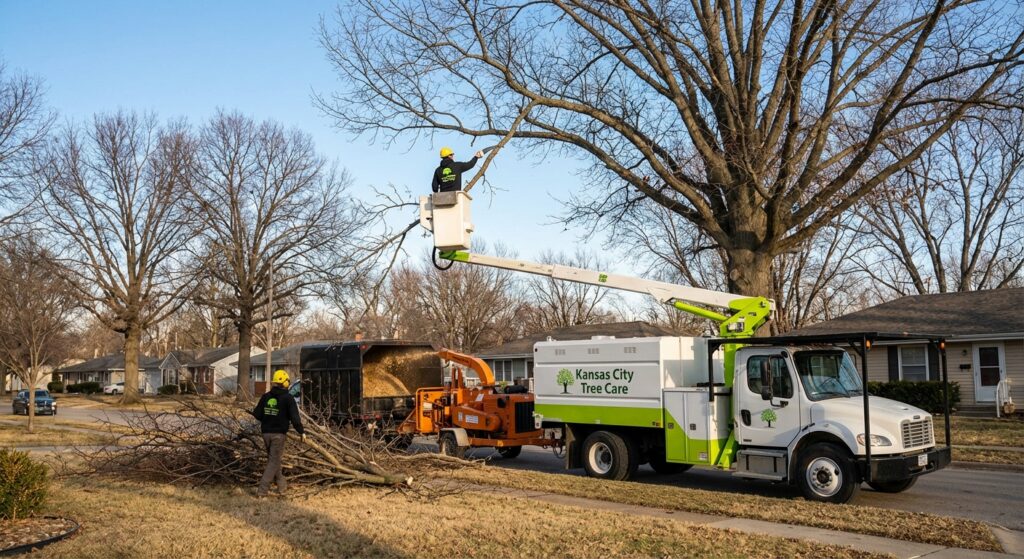

How much does tree trimming cost in Kansas City? Here’s the honest answer: most homeowners in the KC metro pay $300 to $1,200 per tree, with smaller jobs landing around $150 to $400 and big, complicated trees running $1,800 or more.
That’s a wide range, and we get why it can feel confusing. The price depends on real things, like how tall the tree is, where it sits, and how close it grows to your house or the power lines.
We’ve been trimming trees across both sides of the state line for 35 years, so we’ll walk you through exactly what drives the number. By the end, you’ll know what a fair quote looks like before anyone climbs into your canopy.
For more on our full approach to tree trimming and pruning, you can always reach out to KC Tree Care and we’ll take a look.
What Tree Trimming Cost in Kansas City Really Looks Like
Let’s start with the number you came here for. The typical tree trimming cost in Kansas City falls between $300 and $1,200 for a single tree.
Where you land in that range comes down to size and access. A young maple in your front yard is a quick afternoon job. A towering pin oak hanging over your roof is a different story.
Here’s how the pricing breaks down by tree size across the KC metro:
- Small trees (under 30 feet): $150 to $400. Think young maples, dogwoods, or ornamental pears you can almost reach from a ladder.
- Medium trees (30 to 60 feet): $400 to $800. Most mature hackberries, hawthorns, and mid-size oaks fit here.
- Large trees (over 60 feet): $800 to $1,800 and up. Big silver maples, sycamores, and old cottonwoods take more time, more climbing, and more careful rigging.
The good news is that a clear estimate removes the guesswork. When our crew quotes a tree, you get a flat number tied to the actual work, not a vague hourly meter that keeps running.
One more thing worth knowing upfront. The tree trimming cost in Kansas City almost always comes in lower than removal, because trimming preserves the tree you already love. If you’re curious how the two compare, here’s what tree removal costs for most residential trees.
The Factors That Move the Price Up or Down
Two trees the same height can quote very differently. That surprises a lot of homeowners, so let’s pull back the curtain on what actually changes the number.
Here are the factors our estimators weigh on every job:
- Size and height: Taller trees need more climbing time and bigger equipment. This is the single biggest driver of cost.
- Number of trees: Trimming three trees in one visit costs less per tree than three separate trips. We pass that savings on.
- Access: A tree in an open front yard is easy. A tree boxed in behind a fence or a pool means hauling everything by hand.
- Type of trim: Light deadwooding (removing dead branches) costs less than a full crown reduction that reshapes the whole canopy.
- Proximity to power lines: Trees touching Evergy lines call for extra care and sometimes coordination. That adds time and skill.
- Debris and cleanup: Hauling away limbs and chipping brush is built into most quotes, but heavy debris on a big job adds to the total.
The takeaway here is simple. When you understand these factors, you can read any quote and know whether it’s fair.
We’ve trimmed plenty of trees in Leawood and Prairie Village where the only access was a 36-inch side gate. That hand-hauling is part of why an identical tree can cost more on a tight lot than an open one.
Power line proximity deserves a special mention, because it’s the factor homeowners underestimate most. When a limb is tangled around an Evergy line, we can’t just cut it like any other branch.
That work calls for trained rigging, careful drop zones, and sometimes a heads-up to the utility. It’s worth the extra care, and it’s why those branches add to the quote rather than coming free.
Deadwooding vs. Full Crown Work: Why the Trim Type Matters
Not all trimming is the same, and the kind your tree needs has a real effect on price. Let’s make this easy to picture.
Deadwooding means removing the dead, broken, or hanging branches while leaving the healthy structure alone. It’s the lighter, faster service, and it usually sits at the lower end of any size range.
Crown thinning opens up the canopy so light and air move through. This helps the tree handle our gusty KC spring storms with less branch failure.
Crown reduction reshapes and shortens the whole canopy, often to pull a tree back from a roof or power line. It’s the most involved trim, so it carries the highest cost in its size class.
Most homeowners don’t realize this until we explain it, but matching the right trim to the tree saves money. There’s no reason to pay for a full crown reduction when a quick deadwooding gets the job done.
Our ISA Certified arborists assess that on site and recommend the lightest trim that meets your goal. That’s the honest approach, and it keeps your bill where it should be.
Here’s a quick example from last winter. A homeowner in Shawnee called us worried that her big maple needed a major reduction, expecting a steep bill.
When we looked it over, all it really needed was deadwooding and a light thin. She kept the tree she loved, and the price came in hundreds of dollars below what she’d feared.
That’s the value of an expert eye. The right diagnosis often saves you more than the trim itself costs.
How Often KC Trees Need Trimming by Species
Trimming on the right schedule keeps your trees healthy and actually lowers your long-term cost. When you stay ahead of growth, each visit is smaller and cheaper than waiting for an overgrown mess.
Here’s the general rhythm we recommend for common KC metro trees:
- Silver maple: Every 2 to 3 years. They grow fast and the wood is brittle, so regular thinning keeps limbs from snapping in storms.
- Pin oak: Every 3 to 5 years. They hold dead inner branches that need clearing, and our alkaline soil already stresses them.
- Hackberry: Every 3 to 5 years. Hardy and forgiving, they mostly need occasional crown thinning to stay tidy.
- Sycamore: Every 2 to 3 years. These big trees drop limbs and pick up anthracnose in wet springs, so steady trimming helps.
- Bradford pear: Every 1 to 2 years, or consider replacement. Their tight branch angles split easily, so frequent shaping reduces breakage.
Younger trees benefit from light, early shaping that sets up strong structure for decades. We call this structural pruning, and it’s some of the best money a homeowner can spend.
If you’d like a personalized schedule for your yard, you can talk to a certified arborist on our team and we’ll map it out.
KC Tree Species and Why Each One Needs Attention
The KC metro grows a specific mix of trees, and each species has its own quirks. Knowing what you have helps you understand why trimming matters and what it should cost.
Here’s what we see most often across our 16 service cities:
- Silver maple: Fast and beautiful, but the brittle wood makes it a storm-damage magnet. Thinning the canopy lightens the load on weak limbs.
- Pin oak: A KC favorite that struggles in our alkaline clay soil. Trimming dead inner wood keeps the tree breathing and looking sharp.
- Hackberry: One of the toughest trees around. It rarely gives trouble, but a periodic crown thinning keeps it from getting crowded.
- Sycamore: Massive and gorgeous along KC creeks and yards. Regular trimming manages its big falling limbs and wet-spring leaf disease.
- Bradford pear: Pretty in spring, but the weak crotch angles split in storms. Frequent shaping, or replacement, protects your property.
We’ve removed and reshaped hundreds of these trees from Olathe to Lee’s Summit. That hands-on history is how we know which ones reward a light trim and which ones need a firmer hand.
The point isn’t to worry about your trees. It’s to enjoy them with confidence, knowing a quick visit keeps them strong.
The Best Time of Year to Trim in the KC Metro
Timing your trim well protects the tree and often makes the job smoother. The right window depends on the species, so let’s keep it practical.
Dormant season (late fall through winter) is the sweet spot for most trees. With the leaves down, our climbers see the structure clearly, and the tree heals cleanly before spring growth.
For oaks, the dormant season isn’t just better, it’s important. Trimming oaks in winter helps you avoid oak wilt, a disease that spreads through fresh cuts when beetles are active in the warmer months.
So if you’ve got a bur oak or pin oak on your lot, aim for that cold-weather window. It’s the single best move you can make for an oak’s long-term health.
There’s a budget angle here too. Winter and early spring tend to be a calmer stretch for tree crews across the metro, which can make scheduling easier and quotes a touch friendlier.
Summer is the season to be a little careful with certain trees. Heavy trimming during a hot KC July can stress a tree that’s already fighting drought, so we often suggest waiting unless it’s a safety issue.
We do trim year-round for safety and storm cleanup, of course. But for routine shaping, a little timing goes a long way, and it’s free advice we’re always glad to share.
Trimming Across Both Sides of the State Line
We work the full KC metro, on both the Kansas and Missouri sides, and conditions shift a bit depending on where you are. That local knowledge shapes how we trim and what we quote.
On the Kansas side, neighborhoods in Overland Park, Olathe, Leawood, and Lenexa tend to have mature, established canopies. Older trees often need careful crown reduction to keep them clear of homes and lines.
On the Missouri side, areas like Lee’s Summit, Independence, and Kansas City MO sit on heavier clay that holds moisture. That can stress roots, so keeping the canopy balanced helps the whole tree stay steady.
If you’re in southern Johnson County, we put together a detailed guide on trimming in Overland Park that breaks down local specifics. It pairs nicely with everything you’ve read here.
One thing that stays consistent on both sides of the line is the value of established trees. A healthy, well-shaped canopy adds real curb appeal and can lift a home’s value when it’s time to sell.
That’s why we treat trimming as an investment, not an expense. A few hundred dollars of smart pruning protects shade, structure, and the look of your whole property.
Wherever you are in the metro, the pricing ranges above hold true. We just adjust the plan to fit your street, your soil, and your trees.
How to Get the Most Value From Your Trimming Dollar
A little planning makes your trimming budget go further. Here are the moves our long-time customers use to keep costs reasonable and trees thriving.
- Bundle your trees: Trim everything in one visit instead of one tree at a time. You save on setup and travel.
- Stay on a schedule: Regular light trims cost far less than rescuing an overgrown, neglected canopy.
- Trim in the dormant season: Winter scheduling is often easier to book and ideal for the tree.
- Clear access ahead of time: Moving patio furniture or unlocking the gate keeps the crew efficient.
- Get a real on-site quote: A walk-through estimate is always more accurate than a phone guess.
None of this requires you to spend more. In fact, every tip here is about spending smarter, so you protect your property value while keeping the bill in check.
That’s the whole idea behind how we work. We’d rather earn your trust with honest advice than push services you don’t need.
Frequently Asked Questions About Tree Trimming Costs
How much does it cost to trim one tree in Kansas City?
Most single-tree trims run $300 to $1,200, with small trees as low as $150 and very large trees reaching $1,800 or more. The exact price depends on the tree’s height, its access, and how much trimming it needs. An on-site estimate gives you the firm number.
How often should I trim my trees?
Most KC trees do well with a trim every 2 to 5 years, depending on the species. Fast-growing silver maples and Bradford pears need it more often, while hardy hackberries can wait longer. Staying on a schedule keeps each visit smaller and cheaper.
When is the best time to trim trees in the KC metro?
The dormant season, from late fall through winter, is ideal for most trees. For oaks specifically, winter trimming is the way to avoid oak wilt, since the disease spreads through fresh cuts in warmer months. We do handle safety and storm work year-round.
Does trimming cost less than removing a tree?
Yes, trimming almost always costs less than removal because it preserves the tree instead of taking it down. Trimming keeps your shade, your privacy, and your property value intact. It’s usually the smarter first option when a tree is healthy.
Why did I get such different quotes for the same tree?
Quotes vary based on access, the type of trim, and proximity to power lines, not just the tree’s size. A tree behind a narrow gate or tangled in lines takes more time and care. Ask each company what’s included so you’re comparing the same scope of work.
Get a Free, No-Pressure Trimming Estimate
Now you know what shapes the tree trimming cost in Kansas City, from tree size and access to the type of trim and the best time of year to do it. That’s everything you need to read a quote with confidence.
For 35 years, our ISA Certified, licensed, and insured crew has cared for trees across 16 cities on both sides of the state line. We’re a BBB-accredited team of neighbors, and we treat your yard the way we’d treat our own. You can always reach out to KC Tree Care with questions, big or small.
If your trees are ready for a little attention, we’re happy to come out, take a look, and tell you exactly what we’d recommend. No pressure, no obligation, just an honest plan and a fair price. Call Kansas City Tree Care at 913-894-4767 for a free estimate.