A Little Prep Goes a Long Way — For Your Trees and Your Wallet
You’ve booked a tree trimming crew. They’re coming next Tuesday. Now what? Most homeowners don’t realize that spending 30 minutes preparing your yard before the crew arrives can save time on the job (which saves you money), prevent accidental damage, and ensure the crew can focus on the trees instead of navigating obstacles.
We trim trees across the Kansas City metro every day. Here’s exactly what to do before your tree service arrives — and what to discuss with them before the work starts.
Clear the Work Area
The crew needs space to work safely. Before they arrive:
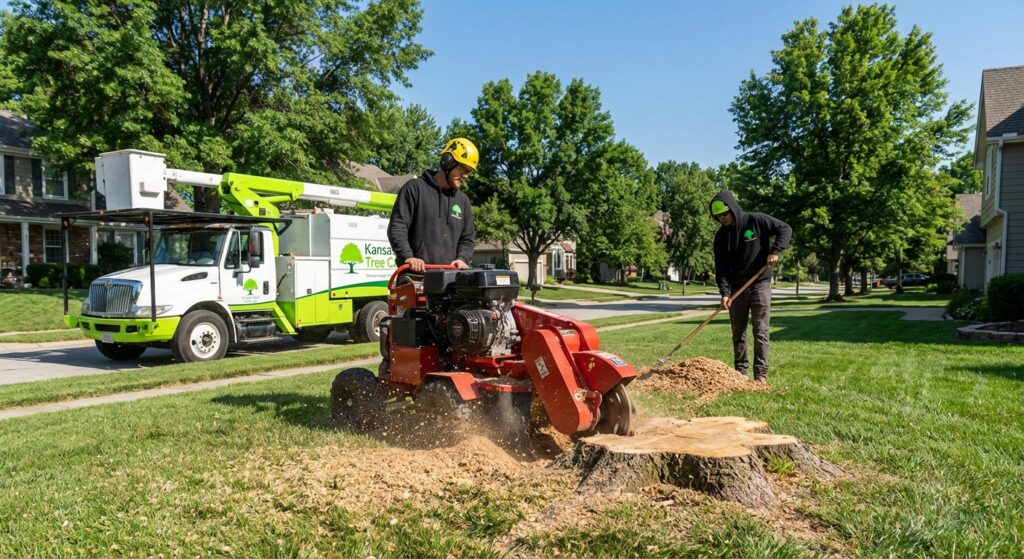
Our tree trimming crew appreciates homeowners who prep their yard before we arrive — it makes the job faster, safer, and often saves you money on the final bill.
Move vehicles. Park cars, trucks, and trailers away from trees being trimmed. Not just directly underneath — move them at least 1.5 times the tree’s height away if possible. Dropping branches is controlled work, but debris can bounce and scatter. A wood chip hitting a windshield from 40 feet up will crack it.
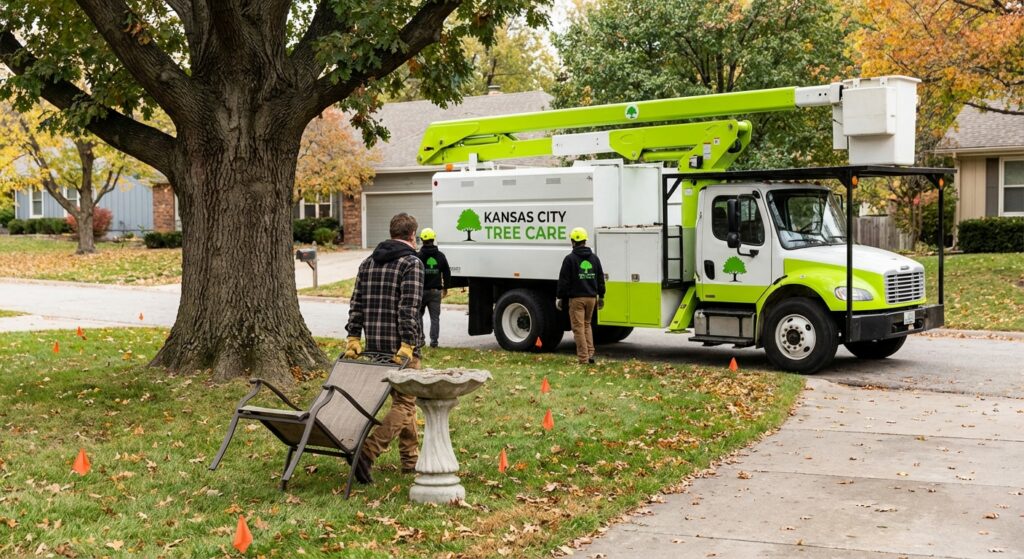
Remove lawn furniture, decorations, and fragile items. Patio furniture, planters, bird baths, garden ornaments, and anything you don’t want a branch landing on. We’ve seen homeowners in Overland Park forget about a $200 bird feeder hanging right where branches needed to drop. It takes two minutes to move it and eliminates the risk entirely.
Pick up toys and outdoor equipment. Trampolines, swing sets, bicycles, dog crates — anything in the work zone. Heavy branches falling from height will damage or destroy these items, and they create tripping hazards for the crew working around them.
Roll up hoses and extension cords. Anything on the ground that the crew could trip over or that the chipper could grab. A garden hose that gets fed into a wood chipper ruins the hose, damages the chipper, and stops the job cold.
Note your sprinkler heads. If you have in-ground sprinklers near the trees, mark the heads with small flags. Heavy equipment and falling debris can damage sprinkler heads, and replacement isn’t cheap. A quick flag-marking saves both of you the headache.
Ensure Access
The crew brings a truck, a chipper, and potentially a bucket truck or crane. All of that needs to get to the work area.
Open gates. If the tree is in a fenced backyard, make sure the gate is unlocked and wide enough for equipment. Standard residential gates in KC metro neighborhoods are often 36-42 inches wide — too narrow for a stump grinder or small loader. If the crew needs to remove a fence panel for access, discuss this before the day of work.
Clear the driveway. The chipper and crew truck need to park as close to the trees as possible. Every extra foot of distance means more time carrying brush and debris — and time is what you’re paying for. Clear the driveway and any paths between the street and the work area.
Trim back obstacles. If shrubs, hedges, or garden beds block the path between the driveway and the tree, trim them back or identify an alternate route. Let the crew know about any terrain issues — slopes, soft spots, drainage ditches, hidden landscape edging.
Protect What Matters
Garden beds and landscaping. If the tree overhangs a garden bed you care about, cover it with a tarp or old blankets before the crew arrives. Wood chips, sawdust, and small debris will scatter during trimming. Covering the beds takes 5 minutes and prevents hours of cleanup later.
Outdoor AC units and equipment. If an air conditioning condenser, generator, or other mechanical equipment is near the tree, point it out to the crew leader before they start. These units can be covered or the crew can adjust their drop zone to avoid them.
Windows. For trees very close to the house, consider closing windows on the tree side. Sawdust and fine debris can blow through open windows and screens, settling on furniture and flooring inside.
Pets. Keep dogs and cats inside during the work. The noise from chainsaws and chippers is stressful for animals, falling debris is dangerous, and a curious dog darting into the work zone creates a serious safety hazard for both the dog and the crew. Secure pets well before the crew arrives — not when the chainsaws are already running.
Communicate with Your Tree Service
Before the crew starts cutting, have a brief conversation with the crew leader. This prevents misunderstandings and ensures you get the result you want:
Walk the property together. Point out every tree that needs work. Confirm what’s being trimmed and what’s being left alone. It sounds obvious, but we’ve had cases where a homeowner assumed a tree was included and it wasn’t on the work order — or the crew started on a tree the homeowner wanted left alone.
Discuss specific concerns. Want to preserve a particular view? Keep shade over the patio? Maintain privacy screening from a neighbor? The crew can adjust their approach, but only if they know what matters to you.
Ask about cleanup. Confirm what’s included — will they chip all branches? Haul away trunk sections? Rake the lawn? Leave wood chips for your garden? Get this clear before work starts so there are no surprises.
Discuss debris placement. Where should the chipper park? Where should they stack any firewood you want to keep? Where can they stage brush for chipping? Having designated spots keeps the job organized and your property cleaner.
Point out underground concerns. Septic lines, irrigation, buried electrical, French drains — anything underground near the trees that the crew should know about, especially if stump grinding is part of the job.
What to Expect on the Day
Here’s what a typical tree trimming day looks like in the KC metro:
Before scheduling, check the best time of year for tree trimming in KC — timing affects both cost and tree health. And read about common DIY trimming mistakes so you know what to look for when hiring a company.
Arrival. The crew arrives with their truck, chipper, and equipment. They’ll do a brief site survey, set up the chipper, and gear up. This takes 15-20 minutes.
Work. One or more climbers go up the tree while ground crew manages ropes, feeds the chipper, and keeps the area clear. For a single medium tree, active trimming takes 1-3 hours. Multiple trees or large trees take longer.
Noise. Chainsaws and chippers are loud. If you work from home, plan calls and meetings around the trim schedule. Notify close neighbors — especially if you share a property line with the tree being trimmed. A quick heads-up about the noise goes a long way for neighborly relations.
Cleanup. The crew chips all small debris, rakes the area, and loads everything out. This is typically included in the price and takes 30-60 minutes depending on the amount of debris.
Walk-through. Before the crew leaves, walk the property with the crew leader. Check that everything you discussed was done, note any concerns, and point out any minor damage (lawn ruts, nicked fence boards) while the crew is still on-site.
After the Trim
Once the crew is gone:
- Water the tree if it’s during the growing season and weather has been dry. Pruning creates stress, and adequate water helps the tree recover and seal wounds faster.
- Inspect the cuts within a day or two. Proper cuts should be at the branch collar with no stubs or bark tears. If you see something that looks off, call the company while it’s fresh.
- Seed any bare spots where debris or equipment disturbed the lawn. Fall is ideal seeding time in KC. Spring works too with proper watering.
- Plan your next trim based on the arborist’s recommendation. Most trees need trimming every 3-5 years. Setting a reminder keeps you on schedule and prevents deferred maintenance from compounding.
Understanding What Happens During the Trimming Process
Knowing what to expect during the actual trimming helps you plan your day and reduces surprises. Here’s the typical sequence for a residential job in the KC metro.
Arrival and setup (15-30 minutes). The crew parks the truck and chipper near the trees being trimmed. They’ll set up safety cones and rope off work areas if needed — especially near sidewalks or driveways. If your street requires traffic cones, the crew handles that. In neighborhoods like Mission and Roeland Park with narrow streets, positioning is important and the crew will work with you on placement.
Climbing or bucket truck positioning (10-20 minutes). For trees accessible by bucket truck, the truck extends its outriggers and positions the bucket. For trees that require climbing (tight access, no room for the truck), the climber sets their ropes and ascending system. An ISA-certified climber inspects the tree’s structure from the ground before going up — this final assessment sometimes changes the pruning plan based on what they see up close.
Pruning (1-4 hours per tree). The climber works from the top down, making cuts and lowering branches to the ground crew using ropes. The ground crew feeds branches into the chipper as they come down. For large dead limbs, the climber rigs them with lowering ropes to control the drop — especially critical when working over your roof, fence, or landscaping.
Cleanup (30-60 minutes). All branches and brush are chipped. The crew rakes the work area, blows debris off hard surfaces, and inspects for any remaining chips or small branches. A clean site is non-negotiable — we don’t leave until it looks better than when we arrived.
Total time for a typical 2-3 tree residential job: 3-6 hours. Larger trees or complex removals may take a full day. We always provide a time estimate before starting.
After the Trim: What to Watch For
Your trees will look different — and that’s the point. But there are a few things to watch for in the weeks and months after trimming.
New growth at cut sites. This is normal. The tree redirects energy to lateral buds near the pruning cuts. This new growth should be healthy and vigorous. If you see excessive sprouting (water sprouts — clusters of thin, upright shoots), it usually means too much was removed. Professional pruning aims to avoid this.
Wound closure. Trees don’t “heal” cuts — they seal them over with new growth (callus tissue). Expect to see the edges of larger cuts gradually rolling inward over the next 1-3 growing seasons. Don’t apply wound sealer or paint. Research consistently shows that wound dressings slow closure and can trap moisture and decay organisms. Let the tree do what it does naturally.
Increased light. With a thinned canopy, more sunlight reaches your lawn and garden beds. This is great for grass growth — you may notice your lawn greening up faster under trimmed trees. It also benefits the tree’s interior branches, which get more light and develop stronger.
If anything looks concerning after a trim — excessive dieback, strange discoloration, bark splitting — call us. We stand behind our work and will come back to assess any post-trimming concerns at no charge.
Frequently Asked Questions
Do I need to be home when the tree crew comes?
It’s ideal to be home at the start so you can walk the property with the crew leader and confirm the scope of work. After that, you don’t need to supervise — professional crews work independently. If you can’t be home, do the walk-through and discussions the day before and leave gates unlocked and the driveway clear.
We trim trees throughout Overland Park, Shawnee, and the KC metro. Here’s what homeowners commonly ask:
Should I water my trees before trimming?
Not specifically for the trim — but don’t let trees go into trimming stressed from drought. If it’s been dry for 2+ weeks in a KC summer, give trees a deep watering a few days before the scheduled trim. Well-hydrated trees heal pruning wounds faster.
What if the tree trimmer damages my property?
Reputable, insured companies handle minor damage professionally. Point it out immediately — while the crew is on-site. Take photos. A licensed tree service carries general liability insurance specifically for property damage that occurs during work. This is why hiring insured companies matters.
How much notice should I give my neighbors?
A day or two is courteous. Let them know what day the crew is coming, approximately how long it will take, and that there will be noise. If branches overhang their property, let them know the crew may need brief access. Most neighbors appreciate the heads-up.
Can I keep the wood chips?
Absolutely — just let the crew know before they start. Wood chips from tree trimming make excellent mulch for garden beds. They can blow chips directly into a designated area or leave piles for you to spread later. Free, quality mulch is one of the underrated benefits of tree trimming.
Make the Most of Your Tree Trimming Investment
A half hour of prep turns a good trimming job into a great one — faster, cleaner, and with less risk of accidental damage. The crew arrives to a clear site, spends their time on trees instead of obstacles, and the result shows in both the quality of work and your final bill.
We provide professional tree trimming across the Kansas City metro — Overland Park, Olathe, Shawnee, Lenexa, Lee’s Summit, Independence, and all surrounding communities. Licensed, insured, and 15+ years in the KC market.
Call Kansas City Tree Care at 913-894-4767 for a free trimming estimate.