Winter Tree Protection in Overland Park: Deicing Salt, Winter Burn, and Frost Cracks
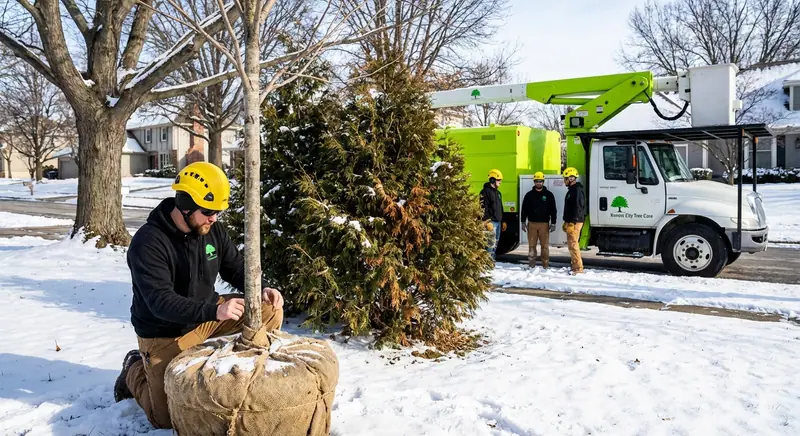
Short answer: To protect trees through an Overland Park winter: water evergreens deeply in late fall and on mild days in a dry winter, keep deicing salt and salty snow piles off root zones, wrap the trunks of young thin-barked trees, mulch the roots, and have dead limbs over the house removed before ice season.
Winter is hard on Overland Park trees in ways that do not show until spring: salt, drying winds, frost cracks and ice. Here is how to prevent the most common winter damage.
On this page (13 sections)
Deicing Salt
Salt spray from streets and salt washing into the soil from drives and walks damage trees along the curb. Symptoms show in spring: late leaf-out, small leaves, browning on the street side, dieback over a few years.
Protecting Trees From Salt
- Use less salt, or sand or calcium magnesium acetate near trees.
- Do not pile salty snow over root zones.
- Water deeply in spring to flush salt down past the roots.
- Burlap screens shield evergreens from street spray.
Salt-Tolerant Trees for Streetsides
Bur oak, hackberry, Kentucky coffeetree and honeylocust handle salt better than maples, pines and lindens. See the best shade trees for Overland Park.
Winter Burn on Evergreens
On sunny, windy winter days, evergreens lose water through their needles while the ground is frozen and roots cannot replace it. The result is brown needles on the south and west sides in spring.
Arborvitae, yews, boxwoods and young spruce and pines in open, windy spots get it worst. Most burned evergreens push new growth from the buds in spring; brown needles on the outside of a branch that has live buds are cosmetic. Wait until late spring before cutting anything out.
Preventing Winter Burn
- Water evergreens deeply in late fall before the ground freezes.
- Water again on warm days in a dry winter.
- Mulch the root zone.
- Screen exposed young evergreens with burlap.
Frost Cracks
Thin-barked trees like maples and lindens can split on a cold night after a sunny afternoon warms the bark. The cracks often close in summer and reopen in winter.
Sunscald
Sunscald is the cousin of frost cracks: on young, thin-barked trees, winter sun warms the south and southwest side of the trunk during the day, the bark cells wake up, and a hard freeze at night kills them. The bark later sinks and peels in a long strip. The same tree wrap that prevents frost cracks prevents sunscald.
Preventing Frost Cracks
Wrap the trunks of young thin-barked trees with tree wrap from late fall to early spring, and take the wrap off in spring. Do not seal existing cracks. A mature tree with a long, deep crack may need cabling and bracing, which typically runs $400 to $1,200.
Winter Tasks for Homeowners
- Prune in late winter while trees are dormant; see the pruning calendar.
- Take out dead limbs before ice season; see ice storm tree removal.
- Knock heavy snow off evergreens gently, from below. Leave ice alone.
- Keep mulch pulled back from trunks so rodents do not chew bark.
When to Call
Call after ice storms for broken limbs over the house, for big cracks in a trunk, or if a tree does not leaf out in spring. Corrective pruning for broken branches typically runs $300 to $800 for a mature tree, and removing a tree that has become unsafe runs $1,500 to $3,500 or more. See our trimming service, a hazardous tree evaluation, or our storm recovery service. A neighbor’s tree over your roof? See property line tree disputes.
Rabbits, Voles and Deer
In a snowy winter, rabbits chew the bark of young trees and shrubs at snow height, and voles tunnel under snow and mulch to gnaw at the base. A young tree chewed all the way around can die. A cylinder of hardware cloth around the trunk, a few inches into the soil and taller than the expected snow, stops both. Keep mulch pulled a few inches back from the trunk so voles have no cover there.
Snow and Ice on Branches
Brush heavy, wet snow off evergreens and shrubs gently, sweeping upward from below so the branch springs back instead of snapping. Leave ice alone. Knocking iced branches breaks them, and iced limbs fall without warning, so stay out from under them until it melts.
Frequently Asked Questions
Should I water trees in winter?
In a dry winter, yes, especially evergreens and trees planted in the last two years. Water on a day above freezing when the ground is not frozen, early enough that it soaks in before night.
Should I wrap my tree trunk for winter?
For young, thin-barked trees like maples and lindens, yes, from late fall to early spring. Take the wrap off in spring so it does not hold moisture or girdle the trunk.
Will my brown evergreen come back?
If the buds at the branch tips are still alive and flexible, usually yes. Wait until late spring and see where new growth appears before cutting anything.
Related Reading
Our Overland Park office is on W 133rd St; see our tree service in Overland Park.
Kansas City Tree Care is a family-owned tree service in Kansas City. Estimates are free: read our reviews on Google Maps, call 913-894-4767, or start at the homepage.

About Kansas City Tree Care
Kansas City Tree Care was founded in 1996 by Zach Johnson, who has worked in the tree trade since 1990. Our crews cover more than 30 cities across the Kansas City metro from our office at 1505 Merriam Lane in Kansas City, KS.