How Much Does Tree Removal Cost in Overland Park? A 2026 Guide
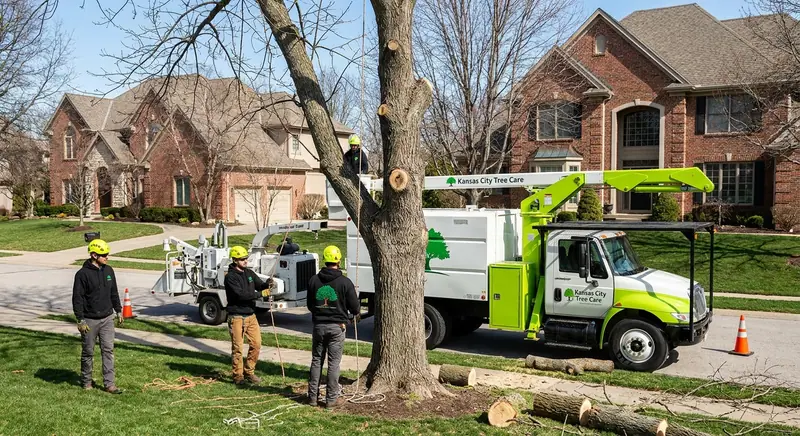
How much does tree removal cost in Overland Park? The honest answer: most residential removals run $900 to $3,800, depending on the size of the tree, how easy it is to reach, and what’s growing around it.
That’s a wide range, and we get why it feels frustrating when you just want a number. So in this guide, we’ll break down exactly what you’d pay for a small tree versus a towering pin oak, and which factors move the price up or down.
We’ve worked across Johnson County for more than 35 years. We’ve taken down trees in tight Deer Creek backyards, removed storm-split silver maples near Corporate Woods, and cleared dying ash trees street after street. Here’s what we’ve learned about pricing, written plainly so you can plan with confidence.
In this guide (12 sections)
- What Tree Removal Cost in Overland Park Really Looks Like
- The Factors That Move Your Price Up or Down
- Why Overland Park Soil and Trees Affect the Job
- Common Overland Park Trees We Remove (and What to Expect)
- Does Stump Removal Cost Extra?
- What’s Included in a Quality Removal Price
- HOA Approval and What It Means for Your Timeline
- When Removal Is the Right Call (and When It Isn’t)
- How to Get an Accurate Estimate
- Frequently Asked Questions About Tree Removal Cost in Overland Park
- Ready for a Free, No-Pressure Estimate?
- Related Reading
What Tree Removal Cost in Overland Park Really Looks Like
The tree removal cost in Overland Park comes down to one main driver: size. A tall, wide tree takes more time, more rigging, and more crew, so it costs more to bring down safely.
Here’s how the ranges typically break down for a healthy tree in a reasonably accessible yard:
- Small trees (under 30 feet): $400 to $900. Think ornamental pears, young maples, or a crowded redbud.
- Medium trees (30 to 60 feet): $1,000 to $2,000. This covers a lot of Overland Park’s mature landscape trees.
- Large trees (60 feet and up): $2,000 to $3,800 or more. Big pin oaks, cottonwoods, and old silver maples land here.
Most of the calls we get fall in that $900 to $3,800 window. The good news is, once our crew sees the tree in person, we can give you a firm number on the spot.
Why such a spread within each category? Because two medium trees can sit at opposite ends of the range. A 40-foot maple in an open side yard is a quick, clean job. A 40-foot oak overhanging your roof and the neighbor’s fence takes hours of careful rope work.
One more thing worth knowing. Removal pricing in Overland Park has held fairly steady going into 2026, even as labor and fuel costs have climbed. We’d rather give you a fair, accurate number than a lowball quote that balloons once the work starts.
If you want a deeper look at how these figures compare across the whole region, we put together a guide on removal costs across the KC metro that walks through the same factors for nearby cities.
The Factors That Move Your Price Up or Down
Two trees the exact same height can cost very different amounts to remove. Here’s what makes the difference, in our experience.
Size and trunk diameter. A thick trunk means more cuts, heavier sections, and slower work. Height matters, but a fat, dense trunk often matters more.
Access. If our truck and chipper can pull right up to the tree, the job moves fast. A tree wedged behind a fence, a pool, or a row of neighbors’ homes takes extra hauling by hand, and that adds to the cost.
Proximity to your house and lines. A tree leaning over your roof, deck, or Evergy power lines needs careful rigging. We lower each limb by rope instead of dropping it. That’s safer for your property, and it takes more time.
A quick note on power lines. If the tree is touching the primary lines along the street, that’s usually Evergy’s responsibility, not yours. We’re happy to help you figure out which lines are which before you pay for anything.
Tree condition. A dead or storm-damaged tree can actually cost more, not less. Brittle wood is unpredictable, so we rig it more cautiously to keep everyone safe.
Whether a crane is needed. For very large trees in tight spots, a crane lifts heavy sections out cleanly. It’s an added cost, but it often saves your lawn, fence, and patio from damage. For homes near Nottingham or older Overland Park neighborhoods with mature canopies, a crane is sometimes the smartest call.
The time of year. Winter and early spring are our busiest stretch after ice storms roll through the metro. Scheduling a non-urgent removal in late summer or fall can sometimes mean shorter wait times. The price itself doesn’t swing much by season, but your timeline might.
Here’s a simple way to think about it. The tree’s size sets the baseline, and everything around the tree, the access, the obstacles, the lines, decides where in that range you land. A skilled crew gives you the full picture before any saws come out.
Why Overland Park Soil and Trees Affect the Job
Johnson County sits on heavy alkaline clay soil, and that shapes how our local trees grow and fail. Knowing this helps you understand why certain trees cost what they do to remove.
Clay soil holds water and drains slowly. Over the years, that stresses roots and can leave a large tree with a weaker hold than it looks like from the street. We factor that into how we drop and rig a tree.
That same alkaline soil causes iron chlorosis in pin oaks, which is the yellowing leaves with green veins you see all over Overland Park. A chlorotic pin oak that’s been declining for years often has weak, dead wood up top, so we treat it as a hazard removal and rig accordingly.
There’s a foundation angle here too. Mature trees planted close to a home draw moisture out of that clay, and when a big tree comes down or dies, the soil can shift as it rehydrates. We’ve seen this near older OP foundations, and it’s one reason we talk through the full picture before recommending a removal.
The point is simple. A local crew that knows Johnson County soil and species prices the job accurately the first time, with no surprises halfway through.
Common Overland Park Trees We Remove (and What to Expect)
Certain species show up again and again in our Overland Park work. Here’s what we typically see and roughly what removal involves.
Pin oak. These are everywhere in OP, and the alkaline soil leaves many of them chlorotic and thin-canopied. A mature pin oak usually lands in the $1,500 to $3,200 range depending on access.
Silver maple. Fast-growing and beautiful, but the wood is brittle and prone to splitting in storms. We’ve removed hundreds across the metro. Big ones run $1,800 to $3,500.
Ash. Emerald ash borer has hit Johnson County hard, and many ash trees now need to come down. The borer (a small green beetle that tunnels under the bark) leaves the wood dead and brittle, which makes climbing risky, so we often rig from outside the canopy. If you’re dealing with one, our guide on emerald ash borer and ash removal explains your options, including saving still-healthy ash trees with treatment instead of removal.
Bradford pear. These split easily at the trunk, especially after ice. Most are smaller, so removal often falls in the $500 to $1,200 range.
Every one of these is handled by our crew through our tree removal service, with the right gear matched to the species and the site.
Does Stump Removal Cost Extra?
Yes, the stump is a separate line item. When we remove a tree, we cut it close to the ground, but the stump and root flare stay behind unless you ask us to grind them out.
Here’s the honest reason. Stump grinding uses a different machine than tree removal, so it’s priced on its own.
For most Overland Park yards, grinding a stump runs $100 to $400, based on the diameter and how many you have. A cluster of stumps or a very wide trunk sits at the higher end.
The good news is, grinding gives you back a clean, usable spot for grass, a garden bed, or a new tree. If you’d like that done at the same visit, just mention it when we come out, and we’ll fold stump grinding into your estimate.
What’s Included in a Quality Removal Price
A removal quote isn’t just for cutting the tree down. A fair price covers the full job done safely, and that’s worth understanding before you compare estimates.
When we give you a number, here’s what’s built into it:
- Dropping or rigging the tree down section by section.
- Cutting the trunk and limbs into manageable pieces.
- Hauling away all the wood and debris.
- Cleaning up your yard so it’s left tidy.
- Full liability and workers’ compensation insurance on every job.
That last point matters more than most homeowners realize. If an uninsured crew is hurt or damages your home in Overland Park, you could be on the hook. We carry full coverage, so you’re protected from the moment we arrive.
If a quote looks unusually low, it often skips hauling, cleanup, or proper insurance. The smarter approach is to compare what each estimate actually includes, not just the bottom-line number.
HOA Approval and What It Means for Your Timeline
Overland Park has plenty of upscale neighborhoods with active homeowners associations, and many require approval before you remove a tree on your property. This is one of the most overlooked parts of planning a removal.
Most HOAs in OP ask for a simple form or a quick board review, especially for larger or front-yard trees. It rarely stops the job, but it does add a few days to your timeline.
Here’s how we help. When a job needs HOA sign-off, we can provide documentation about the tree’s condition and why removal makes sense, which makes the approval smoother for you.
We’ve coordinated with dozens of Johnson County associations over the years. Our advice: check your HOA rules early, so the paperwork runs in the background while we schedule your removal.
When Removal Is the Right Call (and When It Isn’t)
Not every tree needs to come down. Part of our job is telling you honestly when there’s a better, less expensive option.
Sometimes a tree that looks rough just needs trimming to remove dead limbs and rebalance the canopy. Other times, cabling (steel supports that brace a split trunk) can keep a beloved tree standing for years.
Removal is usually the right call when:
- The trunk has a large cavity, crack, or significant decay.
- More than half the canopy is dead, as we often see with ash and chlorotic pin oaks.
- The tree leans sharply toward your home after a storm.
- The roots are heaving and threatening your foundation, driveway, or sidewalk.
If your tree is showing one of these signs, it’s worth getting a closer look from a certified arborist. We’ll tell you straight whether removal is needed or if a smaller fix will do.
We say this often: a healthy tree is an asset to your Overland Park property. Mature trees add real value to a home and shade that cuts summer cooling bills. So when one can be saved, we’d rather help you keep it standing than talk you into a bigger job.
How to Get an Accurate Estimate
The most reliable price comes from an in-person look, and ours is always free. Photos help, but a tree’s real cost depends on access, lean, and what’s underneath the canopy.
When our ISA certified arborist comes out, here’s what we check:
- The trunk diameter and overall height.
- How close the tree sits to your house, fence, and power lines.
- Whether the truck and chipper can reach the work area.
- The wood’s condition, since dead or damaged trees need more careful rigging.
From there, you get a clear written estimate with no pressure. You can also reach us for full-service tree service in Overland Park if you’ve got more than one tree on your mind.
One tip from 35 years of doing this: get your estimate before you’re in a rush. A tree you remove on your own schedule is almost always cheaper and easier than an emergency call after a storm splits it. If you’ve been eyeing a declining tree, the calm of a planned visit works in your favor.
And if you do have more than one tree to handle, we can often price the whole project together, which usually saves you money compared to separate visits. It’s the same crew, same equipment, one trip.
Frequently Asked Questions About Tree Removal Cost in Overland Park
How much does it cost to remove a large tree in Overland Park?
A large tree over 60 feet typically runs $2,000 to $3,800 or more in Overland Park. The final price depends on trunk size, how close the tree is to your home and power lines, and whether a crane is needed to lift sections out safely.
Is stump grinding included in the removal price?
No, stump grinding is priced separately because it uses a different machine. For most Overland Park yards it runs $100 to $400 per stump, based on diameter. Just ask us to include it, and we’ll add it to your estimate before any work starts.
Do I need HOA approval to remove a tree in Overland Park?
Often, yes. Many upscale Overland Park neighborhoods have HOAs that require approval before tree removal, especially for larger or front-yard trees. It usually adds a few days to the timeline, and we can provide documentation to help your approval go smoothly.
Why does removing a dead tree cost more than a healthy one?
Dead and storm-damaged wood is brittle and unpredictable, so our crew rigs it more carefully to protect your property and our team. That added caution and time is why a hazard removal can cost more than taking down a sound, healthy tree of the same size.
How long does a tree removal take?
Most residential removals in Overland Park take a half day to a full day. A small tree might be done in a couple of hours, while a large pin oak near power lines, or a job needing a crane, takes longer to complete safely.
Ready for a Free, No-Pressure Estimate?
Now you know what tree removal costs in Overland Park, what drives the price, and how Johnson County soil and species play into it. That’s everything you need to plan your project with a clear head.
Our family has cared for Overland Park trees for more than 35 years. We’re ISA certified, fully licensed and insured, and we’ll always give you an honest recommendation, even when that means a smaller fix instead of a full removal.
When you’re ready, we’re happy to come out, take a look, and let you know exactly what we’d do and what it would cost. No pressure, no obligation. Call Kansas City Tree Care at 913-894-4767 for a free estimate.
Related Reading

About Kansas City Tree Care
Kansas City Tree Care was founded in 1996 by Zach Johnson, who has worked in the tree trade since 1990. Our crews cover 16 cities across the Kansas City metro from our office at 1505 Merriam Lane in Kansas City, KS.