What an Arborist Actually Does (and Why It Matters)
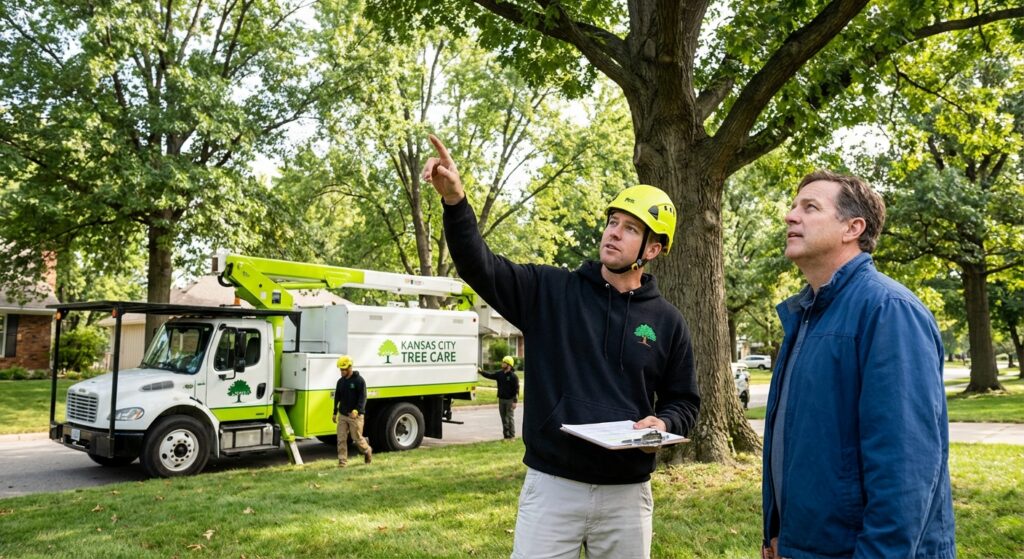
Most KC homeowners call us when something has already gone wrong — a tree fell, a limb cracked, an ash tree died. But the truth is, the best time to call an arborist is before there’s a problem. An arborist is to your trees what a doctor is to your health: you don’t wait until the emergency room to start paying attention.
A certified arborist is a tree specialist trained in the science and art of planting, maintaining, and caring for trees. In the KC metro, where we deal with everything from ice storms to emerald ash borer to alkaline clay soil that tortures pin oaks, having someone who understands local tree biology and risk factors is worth every penny.
Here’s what an arborist actually does, when to call one, and how to make sure you’re hiring the real deal.
Our certified arborists in Kansas City handle everything from routine maintenance to complex hazardous tree situations — and knowing when to call one can save your trees and your wallet.
Arborist vs. Tree Guy: There’s a Difference
Anyone with a chainsaw can call themselves a “tree service.” An arborist is different. Here’s the distinction:
ISA Certification. A certified arborist has passed the International Society of Arboriculture (ISA) exam — a comprehensive test covering tree biology, soil science, tree identification, pruning standards, tree risk assessment, and disease management. They’re required to maintain certification through ongoing continuing education. This isn’t a weekend course — it represents years of study and field experience.
Knowledge base. An arborist understands why a tree is failing, not just that it’s failing. They can identify diseases by symptoms, assess structural integrity through defect analysis, and recommend science-based treatments. A “tree guy” can cut a branch. An arborist knows whether that branch should be cut, when to cut it, where to make the cut, and what the consequences of cutting it are.
Liability awareness. Certified arborists carry professional liability because their assessments and recommendations can have significant financial implications — for property values, insurance claims, neighbor disputes, and safety decisions.
This distinction matters most when you need more than just physical tree work. Pruning, removal, and stump grinding are manual services. Diagnosis, risk assessment, species selection, and care planning are professional consulting services that require expertise.
When to Call an Arborist in Kansas City
Here are the specific situations where an arborist consultation makes sense:
If you notice signs of decline or structural failure, that’s the time to call. An arborist can also perform formal hazardous tree assessments that are sometimes required by insurance companies or municipalities.
Your tree looks sick. Yellowing leaves, leaf drop out of season, wilting, unusual spots or discoloration, premature fall color. These symptoms can indicate dozens of different conditions — nutritional deficiency, root rot, bacterial infection, fungal disease, insect infestation, or environmental stress. An arborist can diagnose the actual problem and recommend the right treatment instead of guessing.
In the KC metro specifically, the most common “sick tree” calls involve pin oaks with iron chlorosis (yellow leaves with green veins from alkaline clay soil) and ash trees with emerald ash borer. Both are treatable if caught early — and both are fatal if left untreated.
You’re worried about a tree’s safety. Cracks in the trunk, leaning, dead branches, mushrooms at the base, root heaving. These are all potential signs of structural failure risk. A hazardous tree assessment by a certified arborist evaluates the actual risk level and recommends specific action — monitor, mitigate, or remove.
You’re buying a home. Mature trees add significant value to a property, but they can also represent significant future costs. A pre-purchase tree assessment identifies trees that need maintenance, trees with emerging problems, and trees that may need removal in the near future. We’ve saved homebuyers in Leawood and Prairie Village thousands of dollars by identifying major tree issues before closing.
You want to plant a tree. Species selection is one of the most consequential decisions in landscaping, and it’s one most people make based on what looks good at the nursery. An arborist considers soil type, sun exposure, space constraints, mature size, local pest and disease pressure, and climate tolerance. The wrong tree in the wrong spot is a 20-year problem. The right tree in the right spot is a 100-year asset.
Your tree was damaged in a storm. After storm damage, an arborist can assess whether a tree can be saved with corrective pruning or whether it’s too compromised to retain safely. This evaluation prevents two costly mistakes: removing a tree that could have been saved, and keeping a tree that’s going to fail in the next storm.
Construction near trees. If you’re building an addition, installing a pool, grading for a patio, or running utility lines, an arborist can assess root zone impacts, recommend protection measures, and advise on which trees can realistically survive construction stress.
Services an Arborist Provides
Beyond the consulting side, here’s the full range of what a certified arborist can do for your property:
Tree health care:
- Disease diagnosis and treatment (fungicide applications, soil amendments)
- Insect management (EAB trunk injections, borer treatments, scale control)
- Soil testing and nutrient management (iron chlorosis treatment for pin oaks)
- Root zone improvement (aeration, mulching, amendment)
- Growth regulation (for trees that are outgrowing their space)
Structural management:
- Pruning and trimming — structural, maintenance, and corrective
- Cabling and bracing — supporting weak branch unions
- Lightning protection — for high-value trees in exposed locations
- Weight reduction — reducing leverage on overextended branches
Removal and site work:
- Tree removal — from straightforward to technically complex
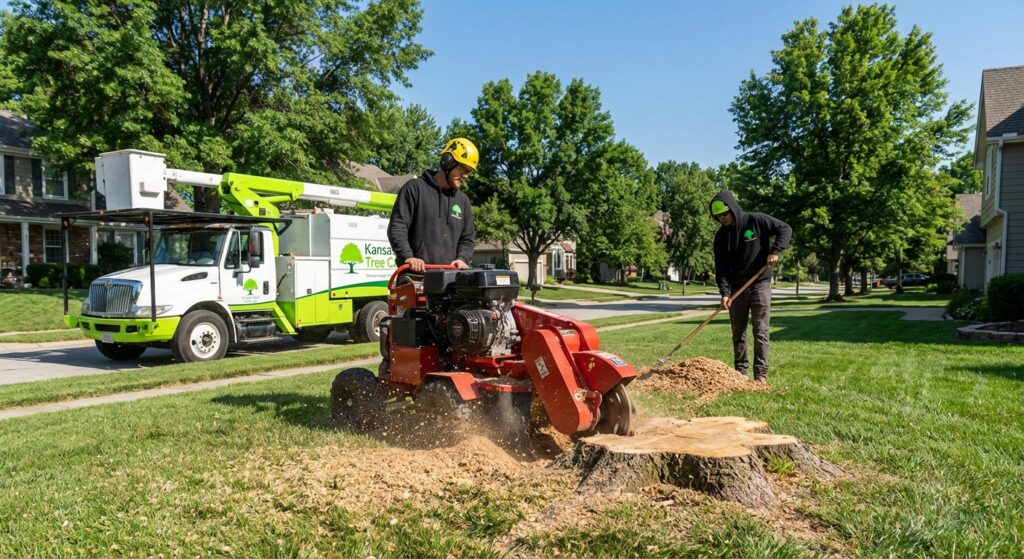
- Stump grinding — after removal or for old stumps
- Land clearing — for construction, development, or landscape renovation
Consulting:
- Risk assessment — written reports for insurance, HOA, or legal purposes
- Species selection and planting plans
- Construction impact assessment — root zone protection during building
- Tree appraisal — monetary valuation of trees for insurance claims, property disputes, or damage quantification
What an Arborist Consultation Costs in Kansas City
Arborist service costs in the KC metro:
Basic consultation (1-3 trees, visual assessment): $100-$250, or often free when combined with an estimate for recommended work.
Comprehensive property assessment (full tree inventory, written report): $250-$500 depending on property size and number of trees.
Written risk assessment report (for insurance, legal, or HOA purposes): $200-$400 per tree. These formal reports include detailed findings, risk ratings, and specific recommendations. They carry the arborist’s professional credentials and can be used as documentation in disputes or claims.
Tree appraisal (monetary valuation): $300-$600 per tree. Uses industry-standard methods (CTLA Trunk Formula Method) to determine the dollar value of a tree. Used for insurance claims when a tree is damaged or destroyed, property tax disputes, and legal cases.
Treatment programs (disease/insect management): Varies widely — $100-$500 per tree per treatment depending on the issue and tree size. EAB trunk injections for ash trees run about $10-$15 per inch of trunk diameter and need to be repeated every 2 years.
Many arborist services roll the consultation into the cost of work if you proceed with their recommendations. The consultation fee is essentially insurance that you’re getting the right diagnosis and the right treatment before spending money on tree work.
How to Choose an Arborist in Kansas City
Not all arborists are equal. Here’s what to look for:
ISA certification. Ask for their certification number and verify it on the ISA website (treesaregood.org). This is the baseline qualification. Some arborists hold additional specializations: Board Certified Master Arborist (BCMA), Tree Risk Assessment Qualification (TRAQ), or Municipal Specialist.
Local experience. Tree care is highly local. An arborist who knows Kansas City’s soil conditions (alkaline clay), common species (pin oaks, silver maples, ash), local pests (EAB, oak wilt), weather patterns (ice storms, straight-line winds), and municipal regulations provides better recommendations than one applying generic national standards. Look for companies with 10+ years in the KC market.
Insurance. Full general liability and workers’ compensation coverage. Verify with the insurance carrier directly, not just a certificate the company provides. This protects you if something goes wrong during tree work on your property.
No topping. If an arborist recommends topping a tree (cutting main branches back to stubs), they’re not following accepted arboricultural standards. Topping is condemned by every legitimate industry organization. Walk away.
Written recommendations. A professional arborist puts their diagnosis and recommendations in writing. This creates accountability, gives you documentation for insurance purposes, and lets you get a second opinion if needed.
Willingness to say “do nothing.” Not every tree needs treatment. Not every defect requires intervention. A good arborist will tell you when monitoring is the right course of action — even though that means they don’t get paid for work. If every tree on your property “needs” expensive treatment, get a second opinion.
Common KC Tree Issues an Arborist Can Solve
Here are real scenarios we handle regularly across the Kansas City metro:
“My pin oak’s leaves are turning yellow.” Iron chlorosis — caused by Kansas City’s alkaline clay soil locking up iron that the tree needs. Treatment options include soil acidification, iron injections, or iron chelate soil applications. An arborist determines which approach works for your specific soil pH and tree condition. Left untreated, chlorosis progressively kills the tree from the top down over 5-15 years.
“My ash tree is dying.” Almost certainly emerald ash borer. If the tree still has more than 50% live canopy, preventive trunk injections can save it. If it’s past that point, removal is the only option — and the sooner the better, because dead ash becomes dangerously brittle fast.
“The tree company wants to top my tree.” Don’t let them. Call a certified arborist for a proper crown reduction plan. Crown reduction achieves the same size goal as topping but uses proper pruning cuts that maintain the tree’s health and structure. It costs more than topping but doesn’t destroy the tree.
“My silver maple keeps dropping branches.” Likely a combination of weak wood, overextended branches, and possibly internal decay at old wounds. An arborist can thin the canopy to reduce weight, cable co-dominant stems, and remove branches most likely to fail. Regular maintenance every 2-3 years prevents most silver maple storm failures.
“I want to plant a tree but don’t know what kind.” For the KC metro’s climate and soil, the best all-around choices include bur oak, Kentucky coffeetree, baldcypress, swamp white oak, and hackberry. The worst choices include Bradford pear, silver maple, and any ash species (EAB risk). An arborist selects specifically for your site conditions — sun, space, soil, drainage, and your goals.
Frequently Asked Questions
What’s the difference between an arborist and a tree trimmer?
An arborist is a tree care professional with formal training and (ideally) ISA certification in tree biology, health, risk assessment, and management. A tree trimmer performs physical pruning work. Some tree trimmers are also certified arborists. The distinction matters most when you need diagnosis, risk assessment, or treatment recommendations — those require expertise beyond the ability to operate a chainsaw.
We serve homeowners across Leawood, Olathe, and every city in the KC metro:
How much does it cost to hire an arborist in Kansas City?
Basic consultations run $100-$250, or often free with an estimate for work. Written risk assessments cost $200-$400 per tree. Tree appraisals run $300-$600 per tree. Treatment programs vary by issue and tree size. Many arborists waive the consultation fee if you proceed with recommended work.
Can an arborist save a dying tree?
It depends on what’s causing the decline and how far it’s progressed. Many tree health issues — iron chlorosis, early-stage EAB, minor root damage, nutritional deficiency — are treatable if caught early enough. Advanced decay, severe root rot, and late-stage EAB typically aren’t reversible. The arborist’s job is to give you an honest assessment of whether treatment is realistic and cost-effective, or whether removal is the better investment.
Do I need an arborist just to get a tree trimmed?
For basic maintenance pruning on healthy trees, a well-trained tree crew is sufficient — you don’t necessarily need a full arborist consultation. But if the tree has any health issues, structural concerns, or if you’re unsure what kind of pruning it needs, an arborist’s guidance ensures the work is done correctly. Bad pruning (topping, lion-tailing, over-pruning) causes more harm than no pruning at all.
How do I verify that an arborist is actually certified?
Ask for their ISA certification number. You can verify it directly on the ISA website at treesaregood.org/findanarborist. The search shows their certification level, specializations, and whether their credentials are current. Any legitimate arborist will be happy to provide this information.
Invest in Your Trees’ Health
Your trees are some of the most valuable assets on your property — a mature tree can add $1,000-$10,000 to property value depending on species and condition. They also represent significant risk if neglected. An arborist helps you maximize the value and minimize the risk.
We’ve been providing certified arborist services across the Kansas City metro for over 15 years — Overland Park, Olathe, Shawnee, Lenexa, Lee’s Summit, Independence, Liberty, and all surrounding communities. Licensed, insured, and ISA certified.
Call Kansas City Tree Care at 913-894-4767 for a free arborist consultation.