
Certified Arborist in Kansas City
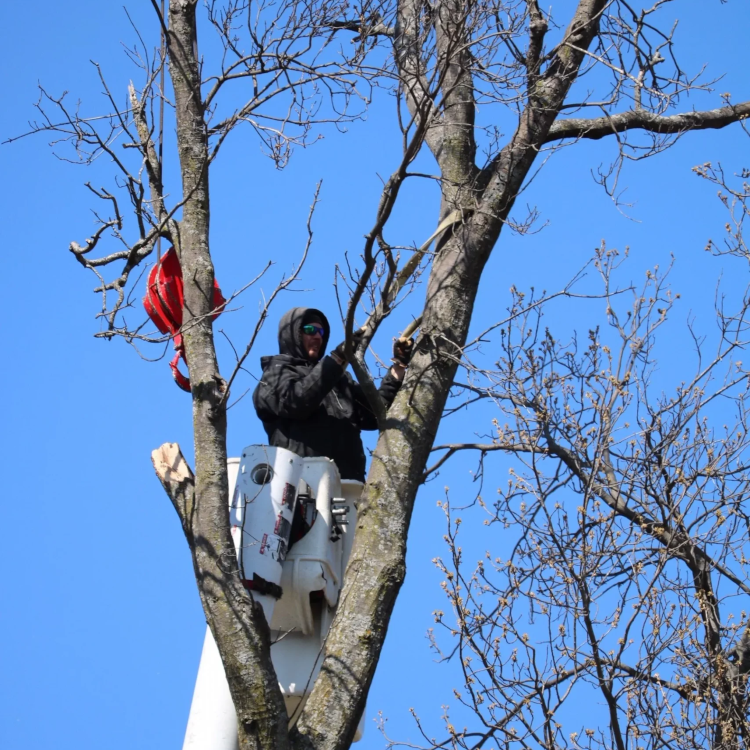
How Can a Kansas City Arborist Help You?
Appearances are everything to keep your residential property beautiful and impressive. How your property looks can make or break the first impression you give to passers-by and clients alike. Maintaining the trees, bushes, and other vegetation on your property neat is crucial to projecting the professional image you want to convey.
However, maintaining trees and shrubs can be difficult and time-consuming, especially if you are not adequately equipped to handle their upkeep. A tree service in Kansas and Missouri can come in handy. With the help of a qualified residential arborist, you can ensure that your property remains immaculate and well-groomed at all times.
By hiring Kansas City Tree Care, you are gaining access to a team of expert arborists who can help you keep your property looking its best and making the most positive impact possible.
What Does an Arborist Do?
An arborist is a tree care professional trained in the science of planting, caring for, and maintaining trees. While any tree service company can cut branches and remove trees, a certified arborist brings diagnostic expertise that can save your trees, your money, and your property. Arborists identify tree diseases before they spread, detect structural weaknesses that could lead to catastrophic failure, recommend treatment options that preserve valuable trees, and advise on species selection and planting for long-term landscape health.
Think of an arborist as a doctor for your trees. Just as you wouldn’t want an untrained person diagnosing a medical condition, you don’t want an unqualified person making decisions about trees worth thousands of dollars in property value. Our arborists assess tree health, structure, root systems, soil conditions, and environmental factors to give you a complete picture of your trees’ condition and your best options going forward. An arborist consultation often saves Kansas City homeowners thousands of dollars by identifying problems early when treatment is effective and affordable, rather than waiting until the only option is expensive emergency tree removal.
Signs You Need an Arborist Consultation
Kansas City homeowners should call an arborist when they notice any of these warning signs: leaves that are wilting, yellowing, or dropping out of season; mushrooms or fungal conks growing on the trunk or at the tree’s base; bark that is peeling, cracking, or falling off in large sections; branches that are dying from the tips back (called dieback); a tree that is leaning more than it used to; visible cavities or hollow sections in the trunk; roots that are lifting out of the ground or showing signs of decay; or any change in your tree’s appearance that doesn’t seem normal.
You should also consult an arborist before major property projects that affect trees — construction near tree root zones, grade changes, hardscaping additions, and utility trenching can all damage or kill trees if proper precautions aren’t taken. An arborist can establish tree protection zones and recommend construction techniques that minimize root disturbance. This planning step costs very little compared to losing a mature tree worth $5,000–$20,000 in landscape value.
Kansas City Tree Health Threats
The Kansas City metro’s tree population faces several significant health threats that our arborists diagnose and treat. Emerald ash borer (EAB), first confirmed in Kansas in 2012, has killed tens of thousands of ash trees across the metro. Signs include thinning crown, bark splitting, D-shaped exit holes, and woodpecker damage. If your ash tree is still healthy, trunk-injected insecticide treatment can protect it — but treatment must begin before the tree is heavily infested. Our arborists assess ash tree viability and recommend whether treatment or removal is the better investment.
Oak wilt is spreading through Kansas City’s oak populations via underground root grafts between adjacent trees. This fungal disease causes rapid leaf drop and can kill a tree within weeks. Bacterial leaf scorch affects pin oaks and red oaks, causing progressive browning of leaf margins that worsens each year. Cedar-apple rust creates orange spots on apple and crabapple trees. Anthracnose causes brown spots and leaf drop in sycamores and maples during cool, wet springs. Our arborists identify these conditions through visual assessment, knowledge of local disease patterns, and when needed, laboratory testing.
Our Arborist Assessment Process
An arborist consultation from Kansas City Tree Care begins with a thorough on-site evaluation. Our arborist examines the tree from the ground up — checking root flare for decay and girdling roots, inspecting the trunk for cavities, cracks, cankers, and fungal growth, evaluating the branch structure for dead wood, weak attachments, and co-dominant stems, and assessing the canopy for dieback, discoloration, and abnormal leaf patterns. We also evaluate the tree’s growing environment including soil conditions, drainage, competition from nearby trees, and proximity to structures.
Based on this assessment, our arborist provides a clear explanation of the tree’s condition, the diagnosis, and your options. For disease and pest issues, we recommend treatment approaches including trunk-injected insecticides, fungicide applications, or cultural practices that improve tree health. For structural issues, we may recommend pruning, cabling and bracing, or in some cases, removal. You get an honest assessment with no pressure — our arborists will always tell you if a tree can be saved and what it will take, or if removal is the more practical option.
Services Our Arborists Provide
Our arborist services in Kansas City include tree health assessments, disease diagnosis and treatment planning, pest identification and management, risk assessment for hazardous trees, pre-construction tree preservation planning, tree selection and planting consultation, soil analysis and amendment recommendations, and written reports for insurance claims, property transactions, and legal disputes. Whether you need a quick assessment of a single tree or a comprehensive evaluation of every tree on your property, our arborists deliver the expert knowledge you need to make informed decisions.
Certified Arborist vs. Tree Trimmer: Why It Matters
Anyone with a chainsaw and a truck can call themselves a tree service company. A certified arborist has passed rigorous examinations demonstrating knowledge of tree biology, soil science, pest management, pruning standards, and safety practices. Kansas City Tree Care’s arborists bring this professional knowledge to every job, which means your trees receive science-based care rather than guesswork. An untrained tree service may recommend removing a tree that an arborist could save with proper treatment, or they may prune a tree incorrectly in ways that cause long-term damage. When your trees are worth thousands in landscape value and your property’s safety depends on their structural integrity, professional arborist expertise is worth the investment. Call 913-894-4767 for a free arborist consultation.
Frequently Asked Questions About Arborist Services in Kansas City
An arborist is a certified tree care professional trained in the science of planting, caring for, and maintaining trees. Arborists diagnose tree diseases, identify structural weaknesses, recommend treatments, and advise on tree selection and planting. Think of an arborist as a doctor for your trees — they bring diagnostic expertise that goes far beyond basic tree trimming and removal. Kansas City Tree Care’s arborists are trained in tree biology, soil science, and ISA best practices.
Kansas City Tree Care provides free arborist consultations for residential properties in the Kansas City metro. Our arborist will visit your property, assess your trees, diagnose any issues, and provide recommendations with cost estimates for any recommended work. There is no charge and no obligation for this initial consultation. Call 913-894-4767 to schedule your free arborist assessment.
Call an arborist when you notice wilting or yellowing leaves out of season, mushrooms growing on the trunk or base, bark peeling or cracking, branches dying from the tips, a tree leaning more than usual, visible cavities in the trunk, or any change in your tree’s appearance. You should also consult an arborist before construction, grade changes, or utility work near trees. Early detection of problems saves money and often saves the tree.
In many cases, yes. An arborist can identify the cause of decline and recommend targeted treatment. Trees suffering from treatable diseases, pest infestations, nutrient deficiencies, or environmental stress can often be restored with proper care. However, trees with extensive trunk decay, severe root damage, or advanced disease may be beyond saving. Our arborists give honest assessments — if a tree can be saved, we’ll tell you how. If removal is the better option, we’ll explain why.
The most significant tree diseases in the Kansas City metro include emerald ash borer (devastating ash trees since 2012), oak wilt (spreading through root grafts in oak populations), bacterial leaf scorch (affecting pin oaks and red oaks), cedar-apple rust (targeting apple and crabapple trees), and anthracnose (causing leaf spots in sycamores and maples). Our arborists are experienced with all of these conditions and can recommend effective treatment approaches.
A tree service company performs physical tree work like trimming, removal, and stump grinding. An arborist provides the scientific knowledge behind that work — diagnosing diseases, assessing structural integrity, recommending treatment, and making decisions based on tree biology and best practices. The best tree service companies, like Kansas City Tree Care, employ arborists so that every job benefits from professional expertise, not just physical labor.
Yes, our arborists provide written reports when needed for insurance claims, property transactions, legal disputes, HOA requirements, and city permit applications. Reports include a detailed assessment of tree condition, diagnosis, recommendations, and supporting documentation. Written arborist reports add professional credibility to insurance claims and can be essential evidence in property disputes involving trees.
We recommend a professional arborist inspection every 2–3 years for most Kansas City properties, annually for properties with large mature trees near structures, and immediately after major storms. Trees over 50 years old, trees showing any signs of decline, and high-value specimen trees benefit from more frequent monitoring. Regular arborist inspections catch problems early when treatment is effective and affordable.