
Tree Service in Kansas City - Certified, Affordable, Local Experts
- Fully Licensed & Insured, Fast & Affordable Service
- Family-Owned Tree Service With Years of Experience
- Trusted Tree Care Experts in Kansas City
- Experienced Crew With Cutting-Edge Equipment
Request A FREE Estimate!
Trusted by Thousands of Kansas City Homeowners
We show up the same day, give you an honest price, and back it with 35+ years of hands-on experience. Routine trimming or complex removal, KC homeowners trust us to do it right.
Your property stays protected on every job. Our crews carry full liability and workers’ comp coverage. We provide insurance certificates on request, most HOAs and property managers require them.
Storms hit at the worst times. Our crews respond around the clock to fallen trees, broken limbs, and storm damage anywhere in the KC metro. Call 913-894-4767 anytime.
Every Tree Service You Need, From One Local Company
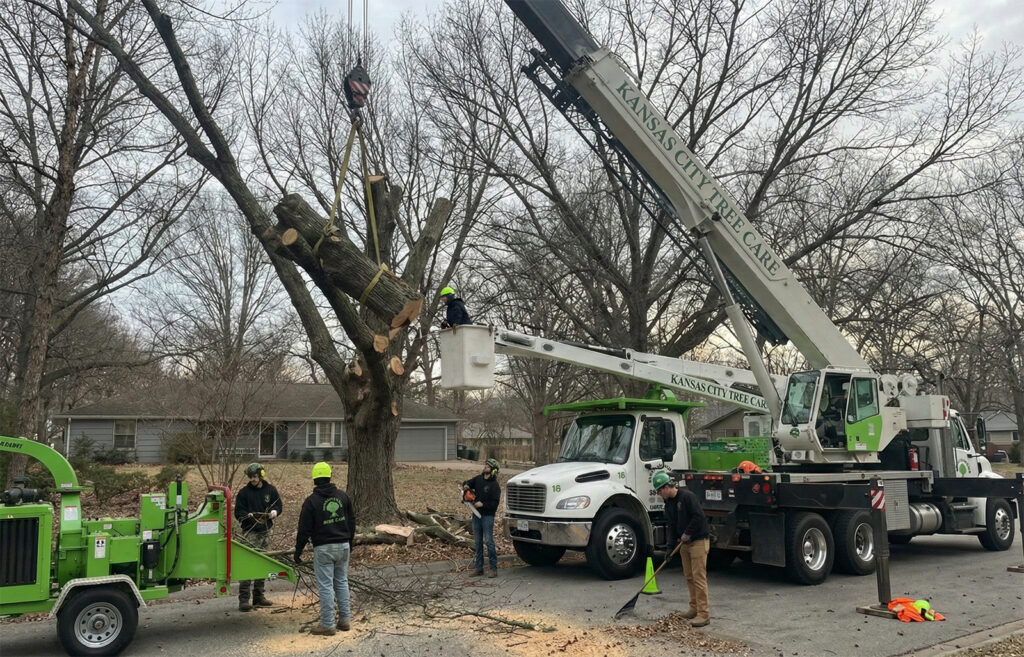

Safe, Reliable Tree Removal
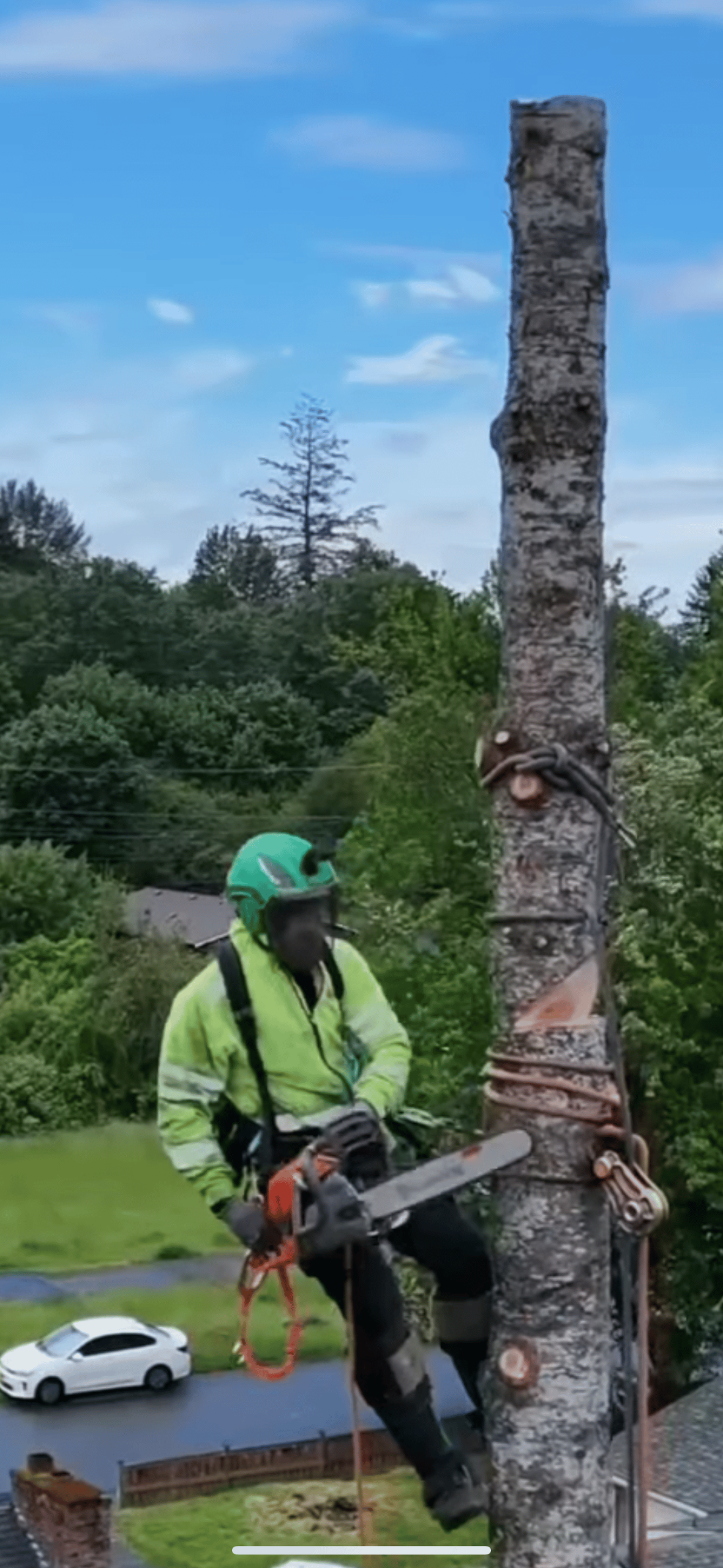
When a Kansas City tree threatens your home, we remove it safely, even in tight spots near roofs and power lines. We section large trees down piece by piece, haul away every limb, and grind the debris. Dead ash from emerald ash borer are some of our most common removals. Full cleanup and free estimates on every tree removal in Kansas City.
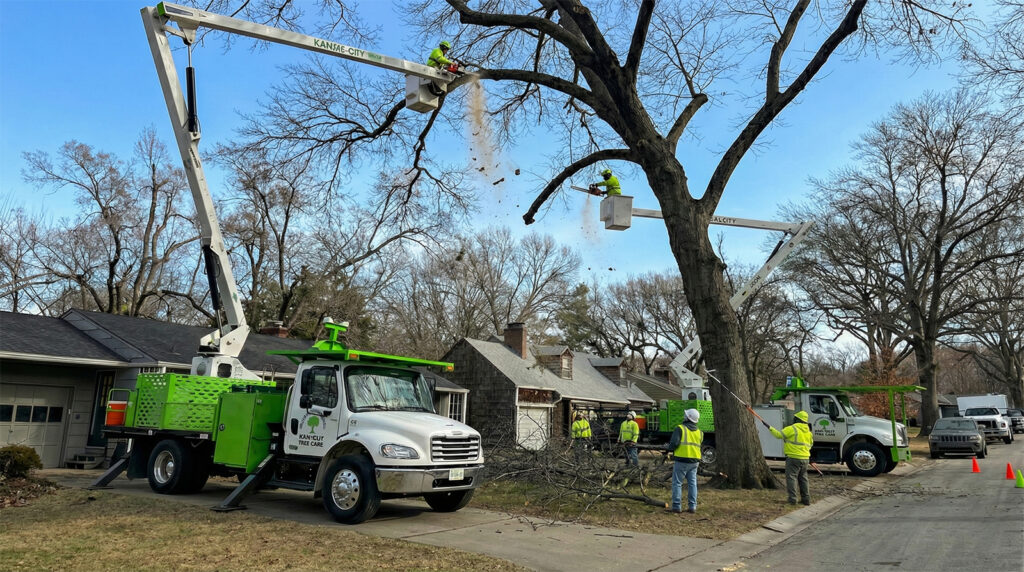
Professional Tree Trimming & Pruning
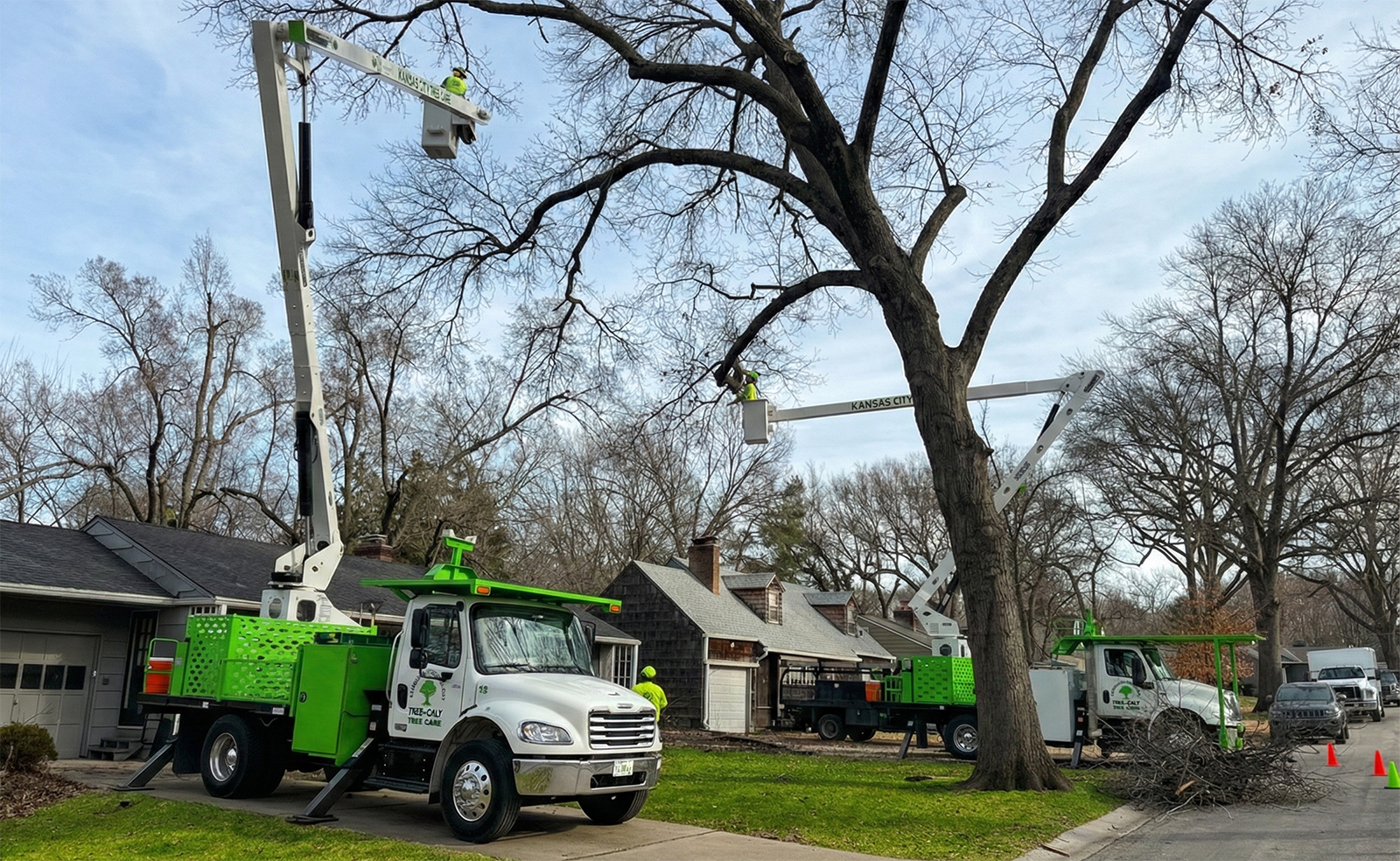
Regular trimming keeps your trees healthy and storm-ready. Our ISA-certified arborists thin the canopy so high winds blow through instead of catching it, lift limbs off your roof, and make the cuts that keep weak branches from tearing loose in the next ice storm. You get a straight answer on exactly what each tree needs.
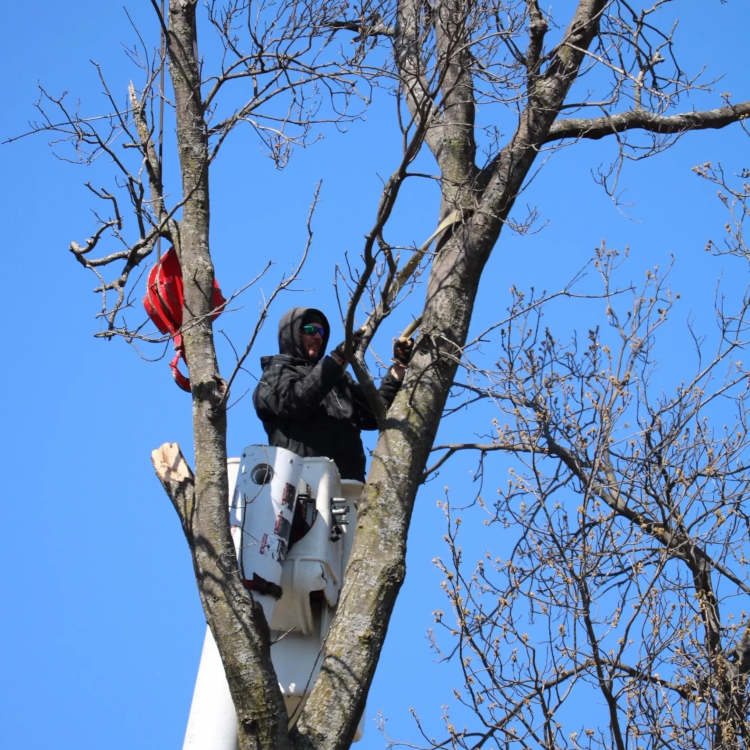
24/7 Emergency Tree Service
Tree down at 2 AM? We answer the phone. Our Kansas City emergency tree service responds 24/7 with bucket trucks, cranes, and chippers, clears trees off homes and driveways, and handles the documentation your insurance company needs to process your claim.

Complete Stump Grinding & Removal
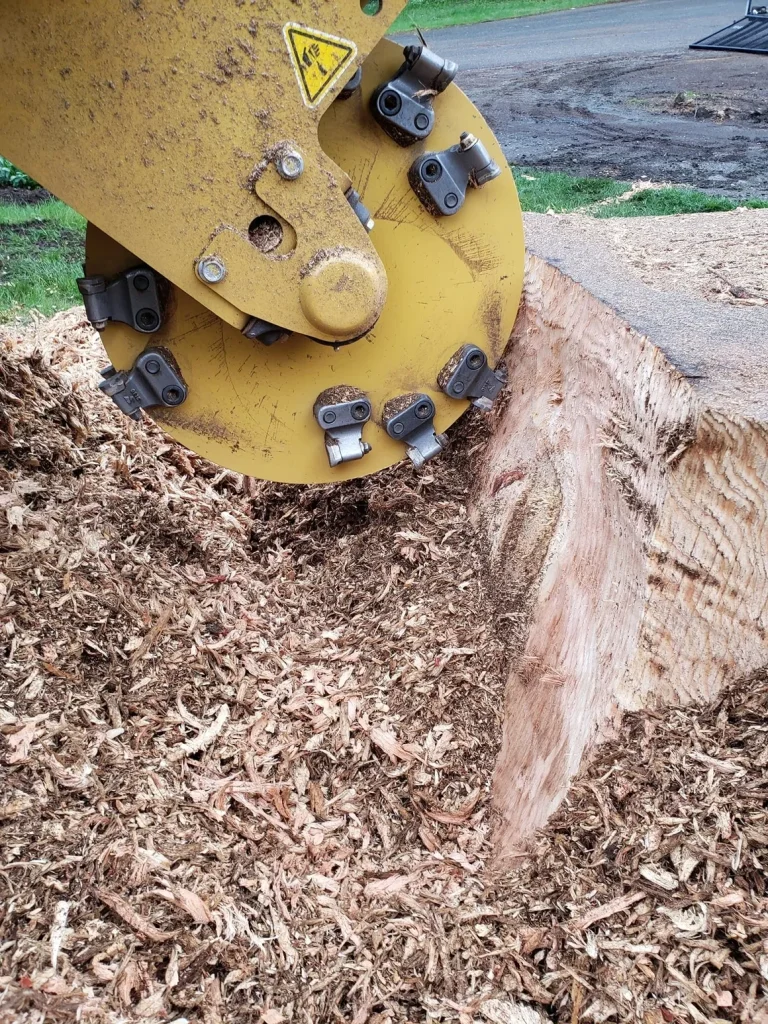
Leftover stumps are tripping hazards and magnets for termites and carpenter ants that spread toward your home. We grind stumps eight to twelve inches below grade and leave your Kansas City yard clean and ready for new sod or landscaping.
Here's What You Can Count On
- Expert team for trimming, pruning, removal & stump grinding
- Residential & commercial service across local metro areas
- Careful inspections for safe, necessary tree removal
- Safety-first, environmentally responsible practices
- Modern equipment for fast, affordable results
- 24/7 emergency & storm response available
- Trusted experience in severe weather conditions
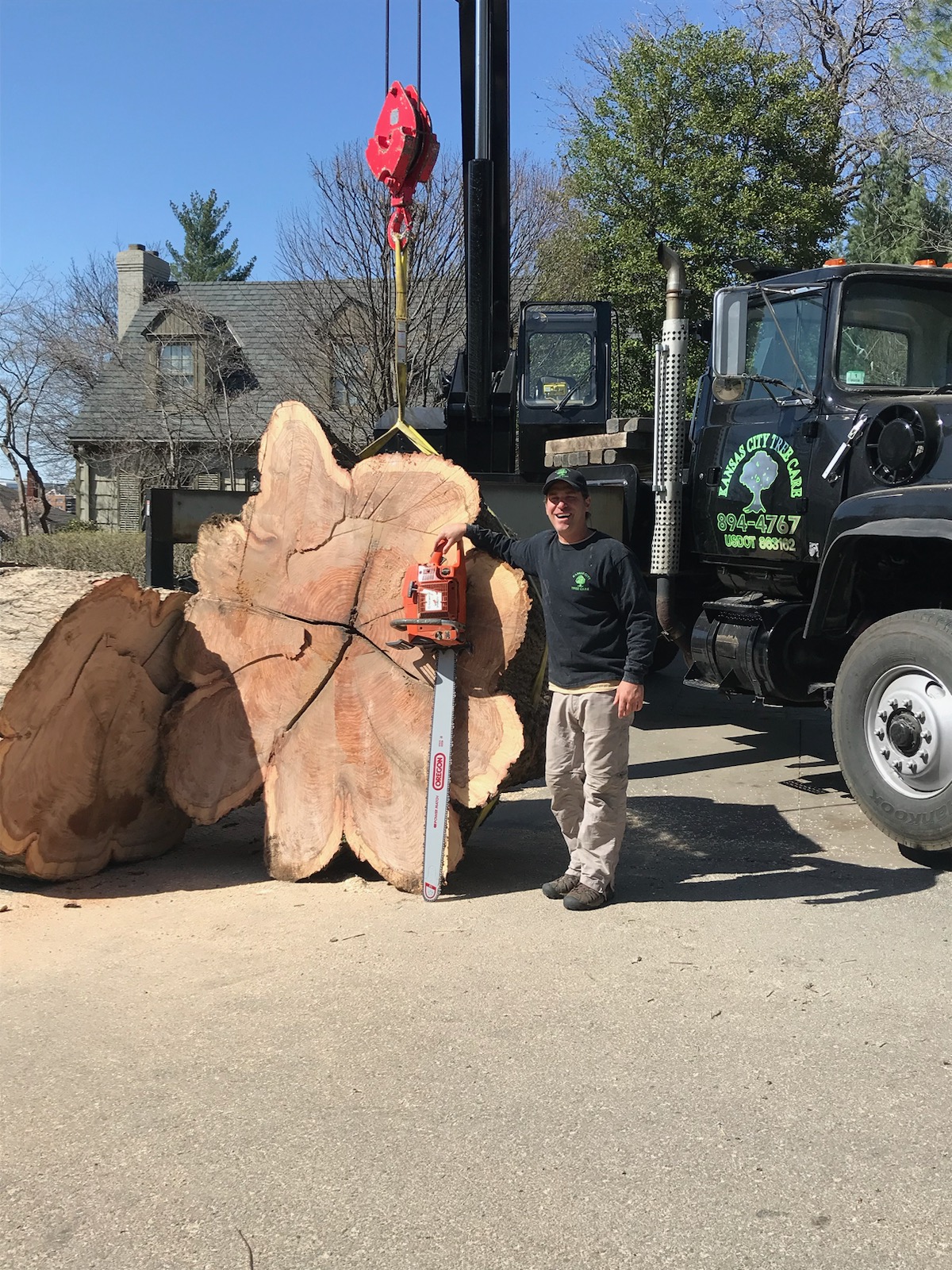

From Tree Climber to Owner: Meet Zach Johnson
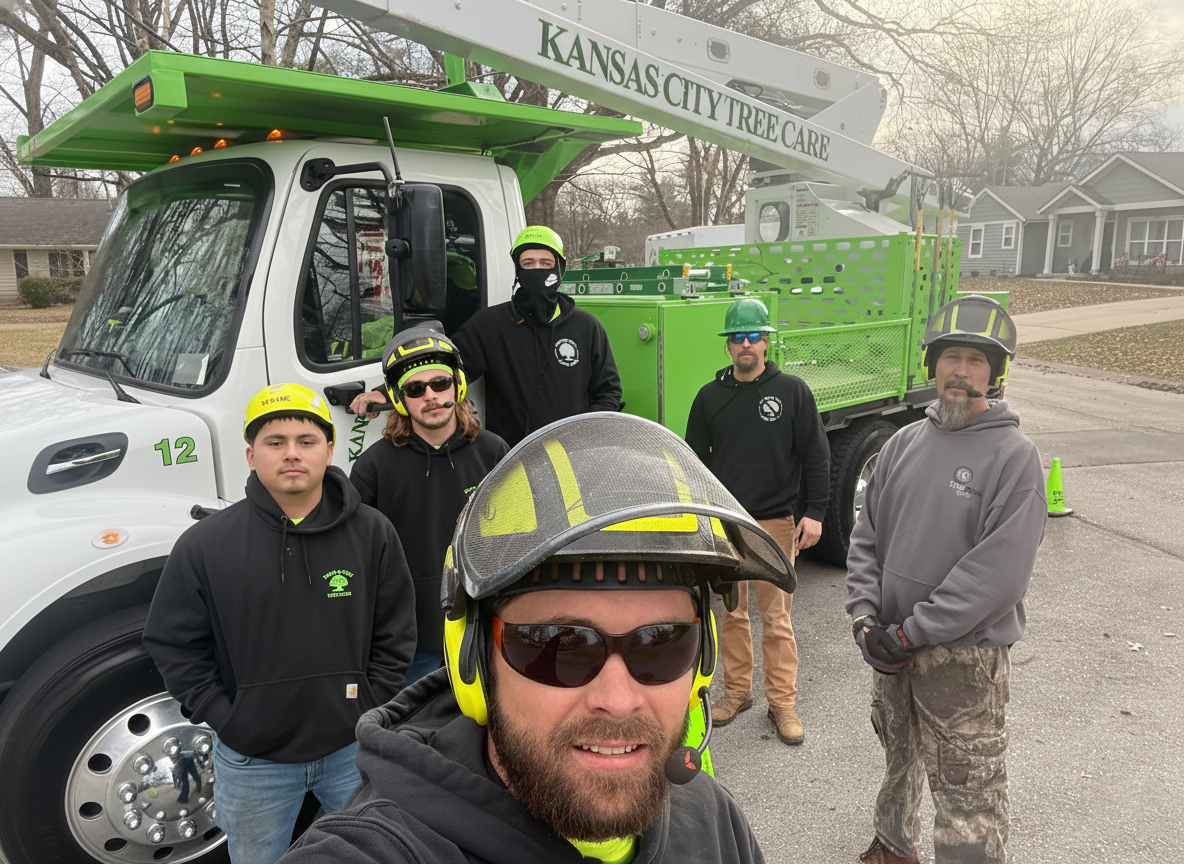
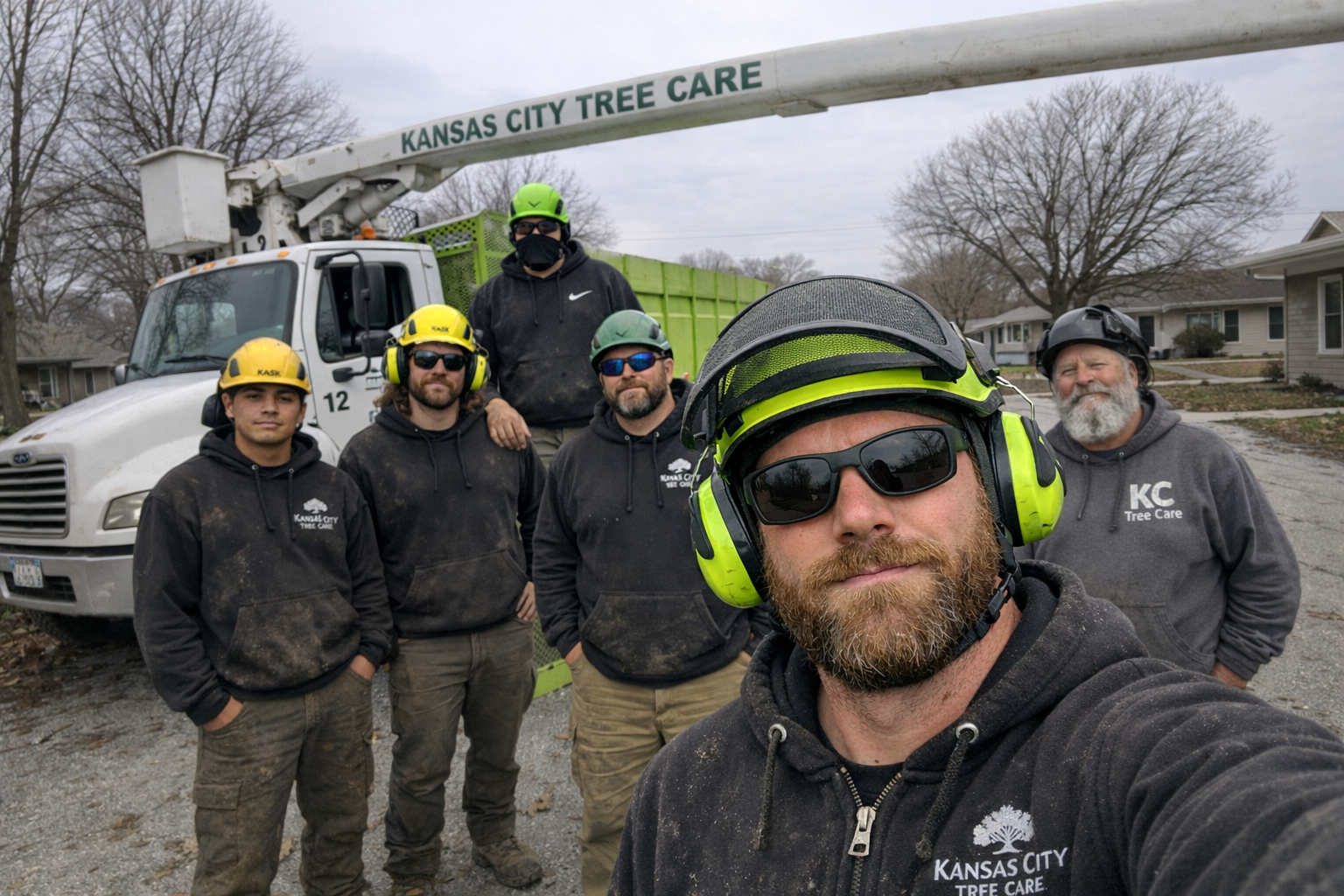
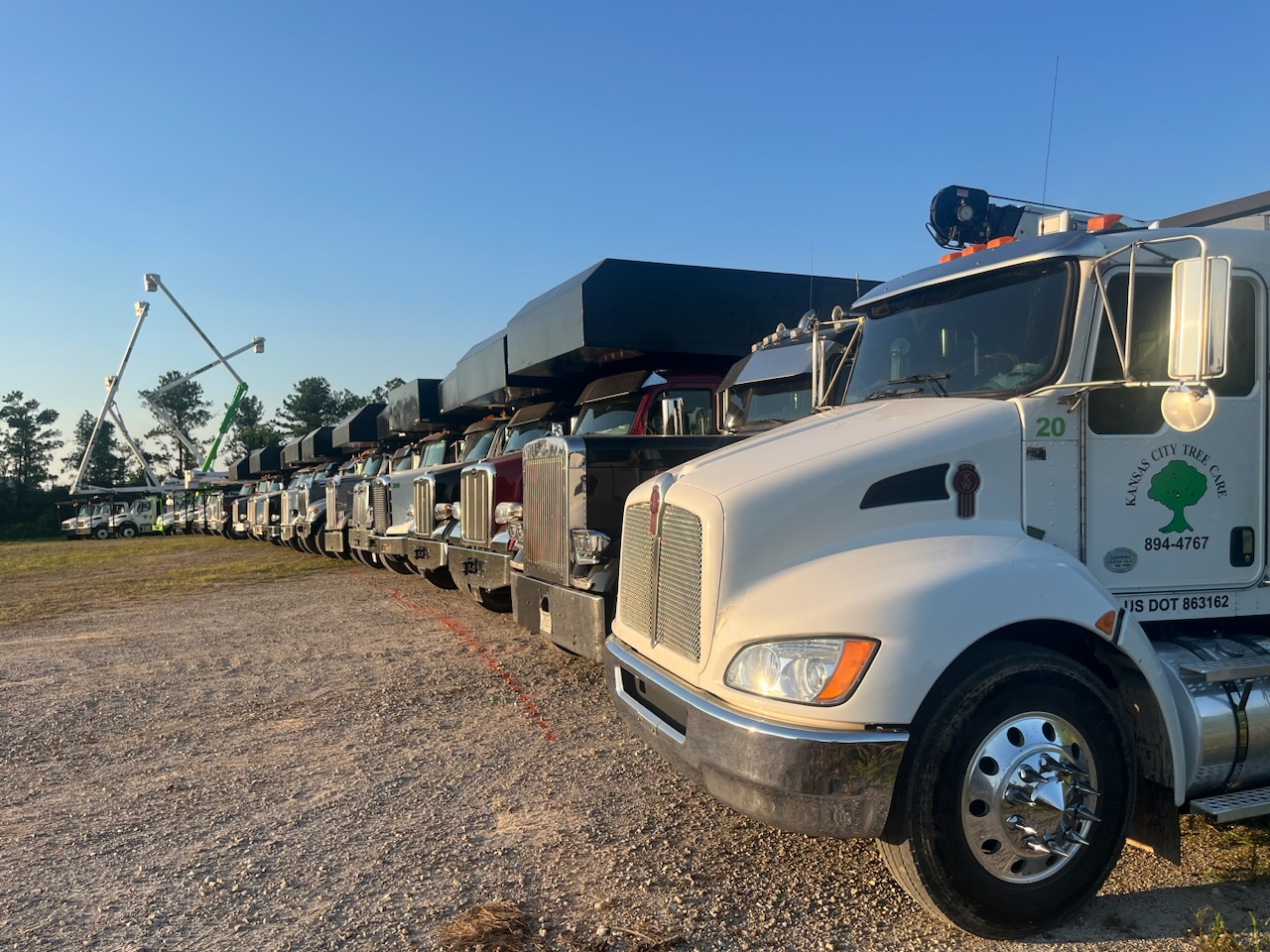
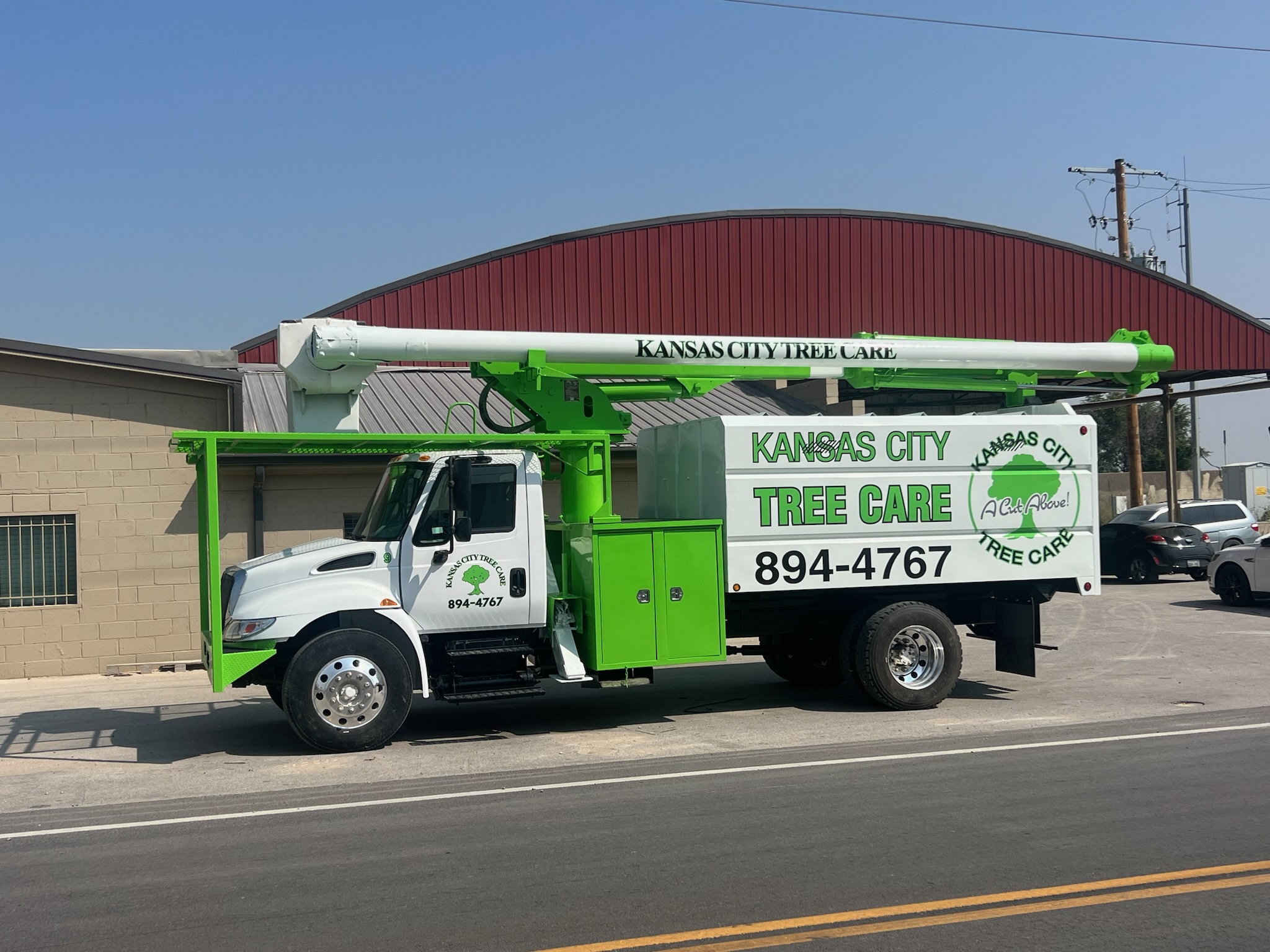
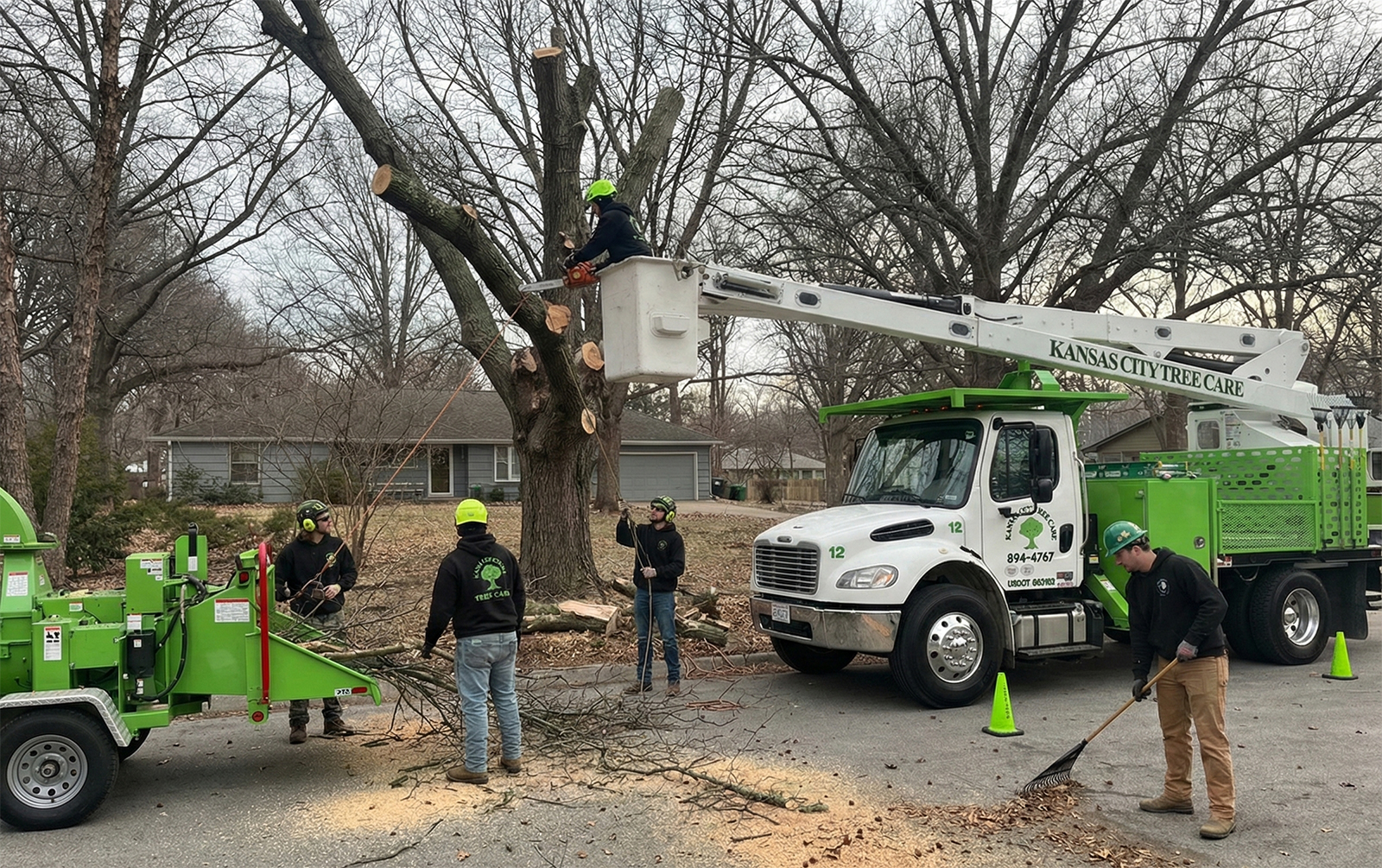
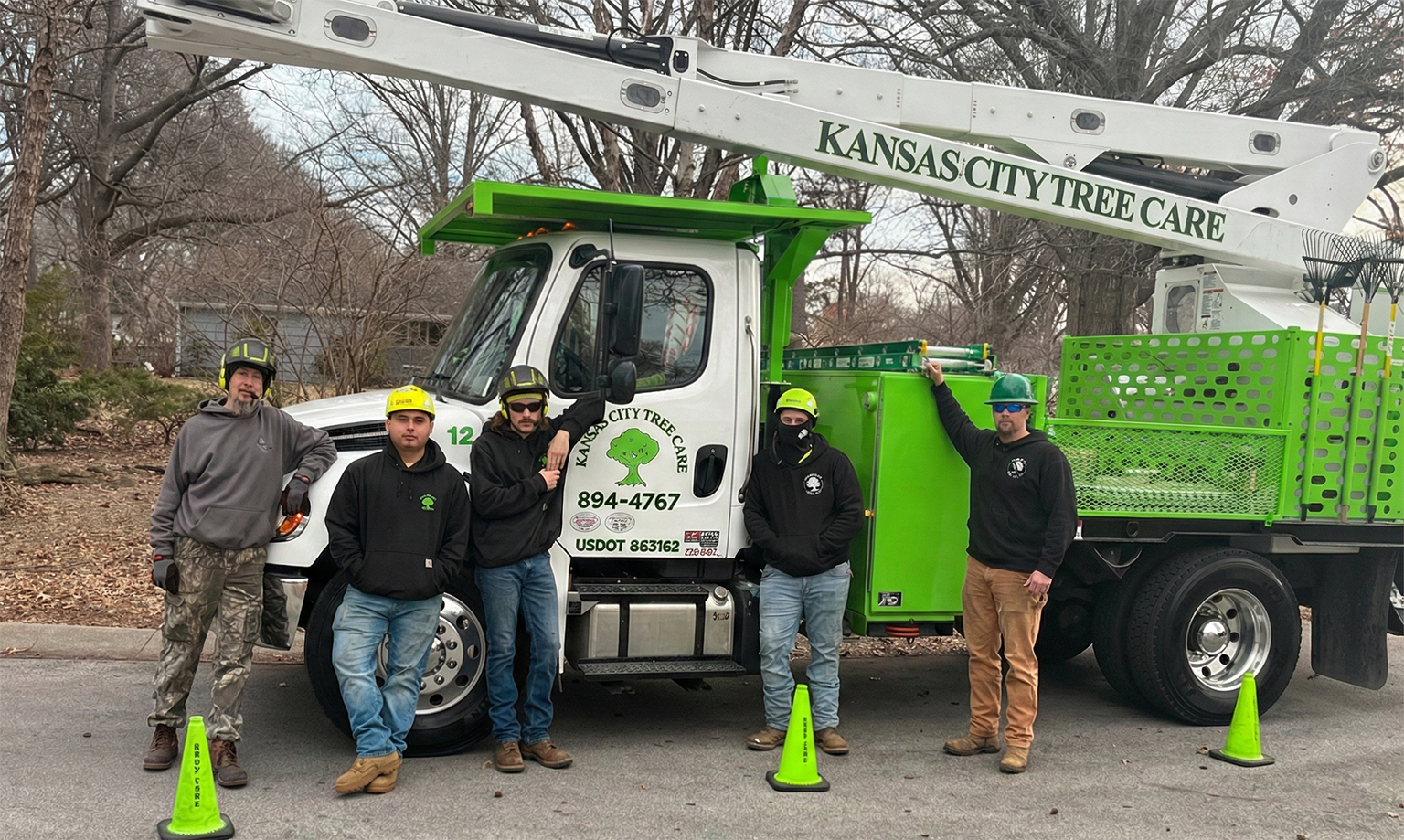
Zach started out as a tree climber, learning the trade the hard way up in the canopy. He built Kansas City Tree Care from a single pickup and a chainsaw on one rule: honest work at a fair price, no upselling, no bait-and-switch estimates, nobody disappearing after you have signed. He still bids most of our jobs himself. That one truck is now a full fleet of bucket trucks, cranes, and chippers run by ISA-certified arborists who live in the same neighborhoods you do. Call us and you talk to the people who actually do the work, not a call center.
Real Tree Work on Real Yards
- Licensed & Insured
- Years of Experience
- Fast Response Times
Anyone Can Rent a Chainsaw. We're Certified Arborists.
The crew that pulls up to your house actually knows Kansas City trees, and we have the training to prove it. Our arborists are ISA-certified, every job is fully licensed and insured, and we look your tree over in person before we ever quote a price. You get a straight answer, a fair price, and a crew that cleans up like it was their own yard. That is the difference between us and the guy with a chainsaw and a magnet sign on his truck.
Serving the Entire Kansas City Metro
We cover the whole Kansas City metro, both sides of the state line. On the Kansas side that is Overland Park, Olathe, Shawnee, Lenexa, Leawood, Prairie Village, Mission, Fairway, and Roeland Park. On the Missouri side it is Lee’s Summit, Independence, Liberty, Grandview, Belton, Raytown, and the Kansas City neighborhoods from Brookside and Waldo up to the Northland. Wherever you are, we know the area and we get there fast when a tree comes down.
We also keep local pages for Brookside, Waldo, and the Northland.
We'd Rather Save Your Tree Than Sell You a Removal
Most of the storm damage we clean up could have been prevented with the right trimming a season earlier, so we would rather catch a problem on a routine visit than meet you at 2 a.m. with a tree on your roof. Whatever you need, tree removal, trimming, stump grinding, or emergency storm cleanup, you get a certified crew and an honest answer about what your tree actually needs, not a sales pitch for work that can wait.
Why Homeowners Keep Calling Us Back

Licensed, Bonded & Insured
Every job is covered by full liability and workers’ comp insurance. That means your property is protected, and you are never responsible if a crew member gets hurt on site. We provide insurance certificates on request, which most HOAs and property managers require before approving work.

Owner With 35+ Years of Experience
Zach has worked Kansas City trees since 1990, and that experience runs through every crew we send out. Ice storm damage on the I-435 corridor oaks, emerald ash borer die-off across Johnson County, tornado cleanup, we have handled all of it. That shows up in faster diagnoses, smarter plans, and work that gets done right the first time.

Tree Care Specialists
Our certified arborists look at your entire property, not just the one tree you called about. We will spot the dead limb you had not noticed, point out root damage that could cause problems next year, and give you a prioritized plan so you can budget your tree care instead of reacting to emergencies.

24-Hour Emergency Services
Trees don’t fall during business hours. Our emergency crews are on call 24/7, 365 days a year. When a storm drops a cottonwood on your garage at midnight, you need someone who picks up the phone and has a crew at your door fast. Call 913-894-4767 anytime.

ISA Certified Tree Worker
ISA certification means our arborists have passed rigorous testing on tree biology, pruning techniques, risk assessment, and industry best practices. It’s the difference between someone who cuts trees and someone who understands them. You’ll see it in the recommendations we make and the results in your yard a year later.

Family Owned & Operated
No corporate call center. No revolving door of subcontractors. No sales rep who has never climbed a tree. When you call us, you talk to the people who actually do the work, and Zach still bids most of the jobs himself. That is why KC homeowners keep coming back. When your neighbor asks who did your trees, you remember our name.
We Serve 16 Cities Across the KC Metro
Find Tree Service Near You
What Your Kansas City Neighbors Say
GOODTrustindex verifies that the original source of the review is Google. Zach and crew did a great job! Highly recommended.Posted onTrustindex verifies that the original source of the review is Google. I have never had a company be so responsive. We lost a large tree that was across our driveway. I left a message and first thing in the morning they were here. Very affordable and super friendly crew!Posted onTrustindex verifies that the original source of the review is Google. Josh and his crew did a wonderful job trimming my oak tree. Made sure I had no limbs going over my solar! Removed and replaced my decoration and made sure to leave the yard better than it was! Great job.Posted onTrustindex verifies that the original source of the review is Google. Josh and his crew did an excellent job. They removed a dead cherry tree and its stump and expertly trimmed a large pin oak. All of this took only a little over one hour, including cleanup. The price was reasonable, and I would highly recommend this company.Posted onTrustindex verifies that the original source of the review is Google. Absolute Professionals! We had extensive "TALL TREE" work done including Two Removals of 60'+ by 20" diameter trees. The two highly experienced climbers truly know what they are doing and the crew did a fantastic job of clearing and finish cleaning. Hands down these guys are the best I've seen. Highly Recommend their services!!Posted onTrustindex verifies that the original source of the review is Google. Great service and professional company. Wyatt was very skilled and knowledgeable.Posted onTrustindex verifies that the original source of the review is Google. Kansas city tree care did a great job very professional and removed two huge trees , a sycamore and pin oak, would highly recommend them, they removed both in one day.


They had the tree removed the same day the tree fell. They did such a good job, we hired them to remove other dead trees.


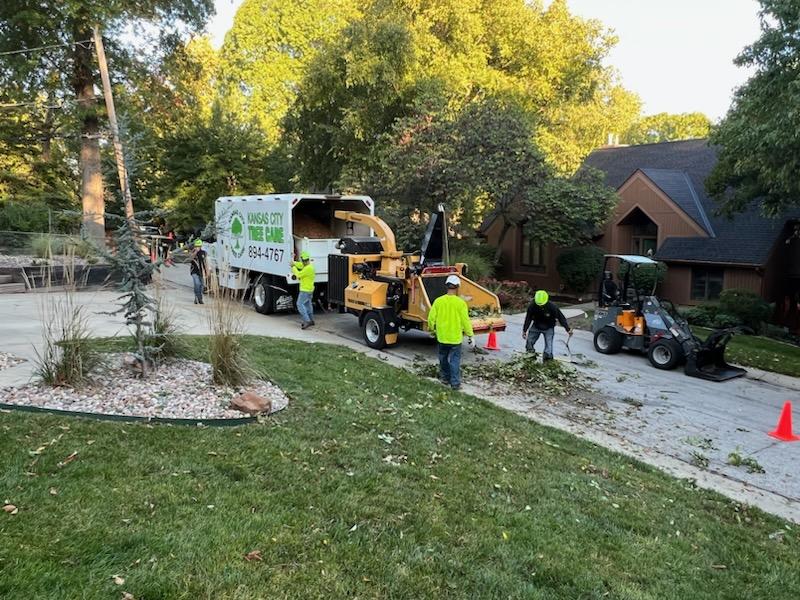
Our ISA-Certified Arborists Protect Your Property and Your Trees
When you hire us, every crew member on your property is trained, licensed, and insured. Our ISA-certified arborists bring the expertise to handle complex tree removals near structures, delicate pruning that preserves tree health, and everything in between.
We carry full liability coverage and workers’ compensation, so you are never at risk. That is the difference between a certified arborist team and a random truck with a chainsaw.
Your Tree Care Questions, Answered
Most Kansas City tree removals run $300 to $3,500, depending on the tree’s height, trunk size, and how close it sits to your house or power lines. A small ornamental runs a few hundred dollars; a large oak over a roof costs more. We give a firm written price before any work starts.
It depends on your city. Kansas City, Missouri generally requires a permit for larger trees in the public right-of-way, while most Johnson County suburbs do not regulate removals on private residential property. We tell you exactly what applies before we start.
Late winter, typically February through early March, is ideal. Trees are dormant, the structure is easy to read, and pruning then promotes healthy spring growth. Hazardous or storm-damaged limbs should be handled any time of year.
Yes. We provide 24/7 emergency tree removal and storm response across the entire Kansas City metro. When a tree falls on your home, blocks a road, or leans on a power line, we respond fast and document everything for your insurer.
Around Kansas City, emerald ash borer is the big one. It has killed ash trees all over Johnson and Jackson counties, and an untreated ash usually has only a few years left once it shows up. If you have an ash, or any tree that is dropping limbs, leaking sap, or losing its leaves early, have it looked at before it turns into a hazard. We will tell you straight whether it can be saved or needs to come down, no scare tactics.
Yes. Kansas City Tree Care is fully licensed, bonded, and insured throughout the KC metro. We carry comprehensive general liability and workers’ compensation, so your property is protected and you are never liable for an on-site injury.
We serve 16 cities on both sides of the metro, including Overland Park, Olathe, Shawnee, Lenexa, and Leawood in Kansas and Lee’s Summit, Independence, Liberty, Grandview, and Raytown in Missouri. Call to confirm we cover your neighborhood.
Trimming shapes the outer canopy and clears limbs from your roof, lines, and fences. Pruning is the more selective removal of specific branches to improve a tree’s health and structure. Most jobs involve a bit of both, and our arborists explain exactly what your trees need.
Call 913-894-4767 for Your Free Tree Service Estimate

Free Consultation
An ISA-certified arborist evaluates your trees on-site and gives you honest recommendations with transparent pricing. No obligation.
Expert Assessment
Get professional guidance on tree health and safety. We explain everything in plain English, no jargon, no pressure.
Detailed Proposal
You’ll receive a clear pricing breakdown with scope, timeline, and total cost. No surprises once we start.
Professional Service
Licensed, insured, on-time, and thorough. We handle full cleanup and keep you informed from start to finish.